America’s beef shortage is creating new winners and losers
Subscribe to our free newsletter today to keep up to date with the latest food industry news.
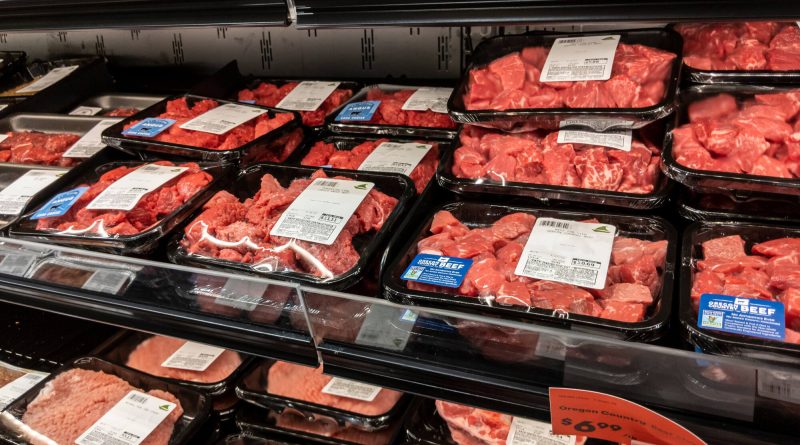
Record beef prices have created an unusual split across the US meat supply chain. Consumers are paying considerably more at the grocery store, meatpackers are contending with costly livestock and cattle producers have gained pricing power after years of herd contraction.
The imbalance is showing up clearly in official data. US beef and veal prices were 9.4% higher in July than a year earlier. Ground beef rose 9%, uncooked steaks 9.6% and roasts 13.5%. Pork prices increased just 0.5% over the same period, making beef one of the more pronounced sources of food inflation.
For ranchers able to bring cattle to market, those retail increases sit at the end of a chain that begins with scarce animals and strong live cattle prices. USDA lifted its 2026 slaughter steer price forecast to $251.10 per hundredweight in July and projected $254.25 for 2027. The June average for slaughter steers in the five-area marketing region was $258.23 per hundredweight, about $23 higher than a year earlier.
The result is more than another commodity price cycle. Years of contraction have changed where bargaining power sits in the beef business, and rebuilding supply will take far longer than changing a production schedule in most manufacturing sectors.
Scarce cattle have changed who holds the pricing power
At first glance, the latest cattle inventory appears to offer some relief. The US had 94.2 million cattle and calves on July 1, slightly above 94 million a year earlier. The more relevant figures for future beef supply tell a different story. Beef cows fell 1% to 28.5 million head, and the expected 2026 calf crop declined 2% to 32.5 million.
That smaller breeding base matters because beef production cannot respond rapidly to higher prices. Ranchers first need enough economic confidence to retain females rather than sell them. Those animals then have to reach breeding age, produce calves and send the next generation through the production system.
There are tentative signs that process has started. Beef replacement heifers reached 3.8 million head on July 1, up 3% from the previous year. The increase points toward some herd rebuilding, but it does little to increase near-term beef supplies.
Scarcity has given cattle sellers leverage, but that leverage does not extend equally through the industry. Tyson Foods expects its beef segment to post an adjusted operating loss of $500 million to $650 million in fiscal 2026. The company cited an industry environment in which USDA projects domestic beef production to decline about 3% from fiscal 2025.
That divergence helps explain why high retail beef prices should not be read as evidence of uniformly high margins. A processor buying expensive cattle has to recover those costs through wholesale beef values. When livestock costs move faster than the value of the meat, packer economics can deteriorate even as consumers encounter higher shelf prices.
Ranchers occupy the opposite end of that equation. The cattle they have spent years raising are now scarce inputs, and scarcity increases their value.
Rebuilding the herd could tighten supply before it expands
High cattle prices should, in theory, encourage ranchers to increase production. In cattle, the response is unusually slow and can initially have the opposite effect.
A producer who decides to rebuild a herd may keep a heifer that otherwise could have entered the meat supply. That reduces current slaughter availability in exchange for the possibility of additional calves later. Research from the Federal Reserve Bank of Kansas City found that cattle inventories have not expanded materially despite favorable economic signals and that elevated costs and uncertainty continue to restrain herd growth.
Demand adds another complication. US beef consumption in 2026 is expected to be about 8% above its average over the past 20 years even as domestic production sits below historical averages, according to the Kansas City Fed’s analysis of USDA data. Strong demand gives producers little room to rebuild inventories without keeping the market tight in the interim.
Trade cannot fully erase the shortage either. USDA’s July outlook projected 6059 million pounds of beef imports for 2026 and 2331 million pounds of exports. Imports can increase the volume of beef available to US buyers, but they do not immediately expand the domestic cattle herd.
Livestock flows from Mexico have faced a separate constraint from New World screwworm controls. As of Aug. 12, all southern US ports of entry remained closed to livestock trade. USDA plans to reopen the Douglas, Arizona, port on Aug. 24 under a phased program, subject to progress on disease-control measures. Santa Teresa and Columbus, New Mexico, could follow after USDA evaluates the first reopening.
For cattle buyers, that means the supply problem has several moving parts. Domestic herd rebuilding, biological lead times, imports and animal health controls can each affect availability, yet none offers an immediate route back to abundant cattle.
Consumers may pay high beef prices after ranch margins turn
The final pressure point is the consumer. Beef inflation is running far above several competing proteins, creating an incentive for households, restaurants and institutional buyers to reconsider purchasing decisions.
July prices illustrate the gap. Beef and veal were 9.4% more expensive than a year earlier, compared with a 0.5% increase for pork. Those differences can push some buyers toward cheaper proteins, alter menu design or reduce portion sizes. Demand for beef has so far remained strong enough to coexist with rising prices.
That creates a difficult planning environment for food manufacturers, restaurant operators and retailers. Procurement teams face the prospect of continued high input costs without knowing precisely when additional cattle supplies will begin to temper the market. USDA’s July forecast still put average slaughter steer prices higher in 2027 than in 2026, a signal that the agency did not expect a rapid return to cheaper cattle.
The market can correct, but cattle production works on biological rather than quarterly reporting cycles. Strong prices provide ranchers with a reason to retain animals and rebuild breeding herds. The same decision limits the number of cattle available for slaughter today.
That is the tension behind the rancher’s current advantage. Record cattle values are rewarding producers who endured years of contraction, yet the response those prices are intended to stimulate may prolong tight beef supplies before it brings relief.
For the broader food industry, the question is no longer simply when beef prices will decline. It is how long businesses and consumers can adapt to a market where the path toward greater supply may keep cattle scarce along the way.
Source