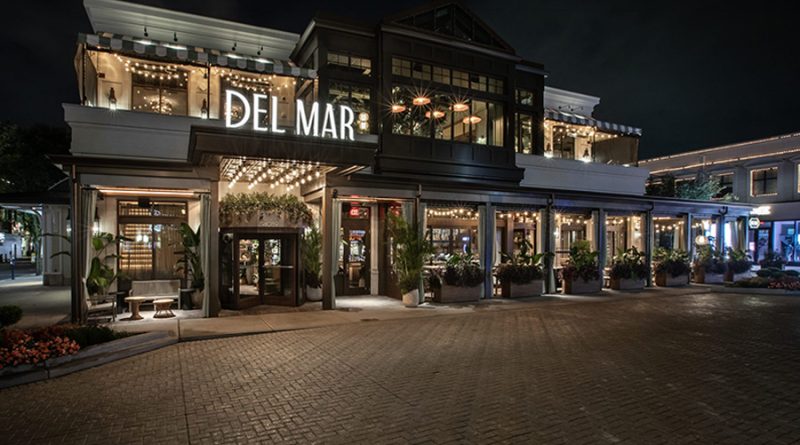
Cameron Mitchell expands with Del Mar in Nora District
Subscribe to our free newsletter today to keep up to date with the latest food industry news.
West Palm Beach has spent the past decade repositioning itself from a seasonal destination into a year-round market for luxury consumption. The arrival of Del Mar, a Mediterranean-inspired concept from Cameron Mitchell Restaurants, marks a calculated move within that shift. Located in the Nora District, the opening reflects a broader pattern in US hospitality, where operators align large-format dining with emerging urban pockets rather than legacy downtown cores.
Cameron Mitchell Restaurants, known for its Ocean Prime brand, is not entering the market as a speculative newcomer. With more than 50 restaurants across multiple concepts, the group has refined a model that blends premium pricing with operational consistency. Del Mar represents a continuation of that approach, with a flexible identity that adapts to regional demand patterns, particularly in high-growth areas like South Florida.
The Nora District remains in development, which makes the timing notable. Rather than following established foot traffic, Del Mar is positioned to help create it. This reflects a shift in site selection strategy, where restaurants act as early anchors in mixed-use environments designed to attract both residents and visitors.
Cameron Mitchell’s expansion strategy moves beyond Ocean Prime
Ocean Prime built its reputation on steak and seafood, offering a standardized luxury experience across major US cities. Del Mar signals a move to diversify both cuisine and format. Mediterranean food offers a wider range of price points and dining occasions, from shared plates to full-service meals, which broadens customer appeal without diluting brand perception.
Florida has become a focal point for this expansion. Population growth, rising incomes, and domestic migration have made cities like West Palm Beach more attractive to hospitality groups seeking new revenue streams. The region also supports year-round outdoor dining, which aligns with Del Mar’s design and operational model.
This multi-concept strategy allows Cameron Mitchell Restaurants to scale without relying on a single flagship brand. It also reduces risk by tailoring concepts to specific markets rather than forcing uniformity. In West Palm Beach, where the dining scene is still developing relative to Miami, that flexibility becomes a competitive advantage.
Del Mar reflects the rise of large-format, experience-led dining
At roughly 12,000 square feet, with capacity for more than 340 guests, Del Mar is designed for volume. The inclusion of multiple bars, private dining rooms, and a large outdoor terrace points to a business model built on throughput as much as ambiance. This is not a niche concept. It is engineered to handle high demand while maintaining a perception of exclusivity.
The emphasis on Mediterranean cuisine supports this positioning. Dishes built around seafood, grilled meats, olive oils, and shared plates lend themselves to longer dwell times and group dining. That dynamic increases per-table revenue while reinforcing the social aspect of the experience.
Design plays a central role. Open kitchens, indoor-outdoor transitions, and layered seating arrangements are standard in upscale dining, but scale remains the differentiator. Larger footprints allow operators to segment the customer journey, offering different experiences within the same venue, from casual bar seating to private events.
Nora District and the economics of destination dining hubs
The Nora District illustrates how real estate and hospitality are increasingly intertwined. Developers no longer treat restaurants as secondary tenants. Instead, they are central to the identity and economic viability of new districts.
By placing a high-capacity, premium concept like Del Mar in an early phase of development, the district gains an immediate draw. This can accelerate leasing activity, increase property values, and establish a reputation that attracts additional operators. The restaurant, in turn, benefits from being part of an environment designed to drive consistent traffic.
This model has appeared in other US cities, where mixed-use developments rely on a combination of dining, retail, and residential components to create self-sustaining ecosystems. West Palm Beach is now adopting a similar framework, though at a smaller scale.
The success of this approach depends on execution. A single restaurant cannot define a district, but it can set expectations. If Del Mar performs as intended, it may influence the types of concepts that follow, shaping the area’s long-term identity.
For Cameron Mitchell Restaurants, Del Mar serves as both a test and a template. If the concept performs well in West Palm Beach, it can be replicated in similar markets across the US. That scalability is critical in an industry where margins remain tight and growth depends on operational efficiency as much as brand appeal.
West Palm Beach, in this context, is part of a broader strategy that reflects how restaurant groups are adapting to shifting demographics, real estate dynamics, and consumer expectations.
Sources