Can the UK manufacture its own food future?
High tech greenhouses as the next sustainability frontier
For decades, the UK has relied heavily on imported fresh produce to satisfy year round consumer expectations. Today, only 17 percent of the fruit eaten in Britain is grown domestically, leaving the nation deeply exposed to supply chain shocks, climate volatility abroad and geopolitical disruption. At the same time, British growers are contending with unprecedented economic pressures: rising input costs, energy market instability and a looming 94 percent increase in electricity network standing charges, a change that threatens the viability of many energy intensive greenhouse businesses.
These pressures raise a profound question: could the UK begin manufacturing its own food future, using high tech greenhouses and vertical farms to produce more of what it eats, all year round?
An emerging consensus says this transformation is possible — but only through coordinated action. High tech farming is no longer just an agricultural issue; it is a sustainability challenge, an energy challenge, an industrial strategy challenge, and increasingly, a social affordability challenge too.
A growing system under strain
The UK’s glasshouse sector is at a critical inflection point. More than 70 percent of existing British greenhouses are over 40 years old, lacking the efficiency, insulation, LED lighting and environmental controls that characterize modern European rivals. This ageing infrastructure is ill equipped for the UK’s high energy prices, which already exceed those paid by growers in France, Germany and the Netherlands.
Yet consumer expectations have shifted dramatically. Year round access to berries, tomatoes and salad crops are expected as standard by the UK shopper, despite the UK’s climate offering only a short natural growing season. The result is a widening gap between what households expect and what domestic agriculture can deliver economically.
High tech greenhouses — collectively known as controlled environment agriculture (CEA) — offer a promising bridge between these realities.
The promise of controlled environment agriculture
CEA transforms food production into something closer to precision manufacturing. Inside these facilities, every variable — from light and humidity to nutrient flow and CO₂ concentration — is tightly regulated. The benefits are substantial: studies show that controlled environment systems can reduce water and nutrient waste by up to 95 percent, delivering predictable yields regardless of season or weather.
CEA can therefore provide consistent, local, year round supply with far lower exposure to climate shocks and long distance logistics. In a world of increasingly unstable global agriculture, this is no small advantage.
Yet despite the promise, the economics remain challenging. Investment requirements are significant, energy costs are high, and the absence of dedicated horticulture subsidies — unlike in the Netherlands, where
growers receive support covering up to 20 percent of LED lighting investments — puts British producers at a competitive disadvantage. This is where collaboration becomes essential.
Innovation in practice — without relying on outliers
There are pioneers out there who have shown what the future could look like when engineering expertise and agriculture intersect.
This amalgamation of entrepreneurial spirit and tech focused mindsets has resulted in the creation of large integrated farms that combine renewable power generation, heat recovery and CEA methods to produce consistent, high quality crops year round. One notable example is Dyson Farming, which powers its 26 acre Lincolnshire glasshouse using renewable electricity and surplus heat from anaerobic digestion, reducing reliance on imported winter strawberries that often travel thousands of miles.
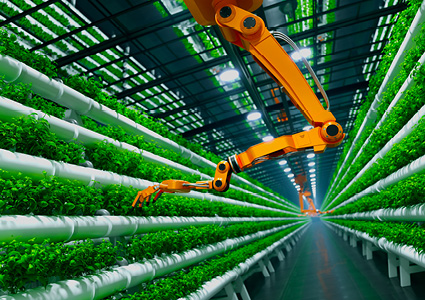
These projects offer a glimpse of the possible, closed loop energy systems, data driven growing, robotics, and climate controlled precision. But they also highlight a key limitation: these models depend on substantial capital, specialist skills and integrated energy assets that are not available to the majority of UK growers.
To make high tech British farming widely accessible, the UK cannot rely on exceptional innovators. Instead, it must build systems that allow ordinary growers to succeed using extraordinary tools.
Affordability: the critical test
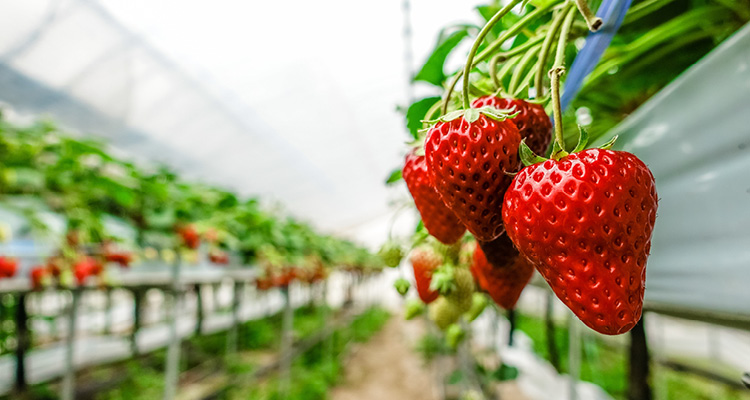
High tech farming is only valuable if the food it produces remains accessible. Here, the UK faces a critical challenge. Early high tech products command premium prices; for example, some advanced greenhouse grown British strawberries currently retail in the premium ranges of major supermarkets at approximately £15.60 per kilogram, compared with around £10 per kilogram for standard British strawberries — a notable 50 percent price premium in an era where households are already squeezed by rising living costs.
This raises an essential question: If high tech farming produces high quality food, can it also produce affordable food?
The answer lies in scale and collaboration. When a single grower bears the full cost of energy, heat, CO₂, water recycling, automation and labor, prices inevitably rise. But when these systems are designed at a regional, industrial scale, costs should fall as seen in the successful model in the Netherlands.
Ultimately affordable high tech produce is possible — but only through integrated, shared infrastructure.
The case for a collaborative food manufacturing ecosystem
If CEA is to reach mainstream affordability, the UK must treat modern greenhouses as components of wider industrial ecosystems rather than standalone facilities.
This means integrating agriculture with:
- Energy networks: capturing waste heat from industry, using district heating, and connecting farms to low carbon energy sources.
- Waste to resource systems: converting organic waste into renewable power, repurposing CO₂ streams, and recycling water efficiently.
- Technology providers: embedding robotics, AI, sensors and automation developed by UK engineers into agricultural settings.
- Retailers and supply chains: forming long term partnerships that give growers the stability required to invest in new infrastructure.
- Government policy: providing targeted incentives and reforming energy markets to support strategic food manufacturing.
This collaborative approach mirrors the model that has enabled the Netherlands to become one of the world’s most productive and competitive greenhouse producers — built on coordinated heat networks, shared logistics, dedicated subsidies and strong government industry alignment.
If the UK embraces similar cross sector integration, the economics of CEA shift from premium novelty to scalable, affordable reality.
Manufacturing a more secure food future
Re shoring food production is not simply about reducing imports. It is about resilience, sustainability and national capability. High tech greenhouses can help the UK reduce exposure to global supply chain shocks, lower food miles, cut emissions, create high value agritech jobs and provide consistent supply.
But without tackling affordability, the transition will fall short.
And without collaboration, affordability will remain out of reach.
Britain’s future food system cannot depend on a handful of advanced facilities or individual visionaries. It must be built on shared infrastructure, shared investment, shared innovation and shared responsibility.
If the UK can align energy policy, industrial strategy, agritech innovation and agricultural capability, it can build a new kind of food system — one that is sustainable, resilient, and genuinely competitive.
A system where high tech British produce isn’t a luxury for the few, but an affordable staple for the many.
Tristan Holiday
Tristan Holiday is Senior Manager at independent management and technology consulting firm, BearingPoint. An independent management and technology consultancy with European roots, BearingPoint’s global network spans over 70 countries and 13,000 people, operating in three business unite:consulting, products and capital.