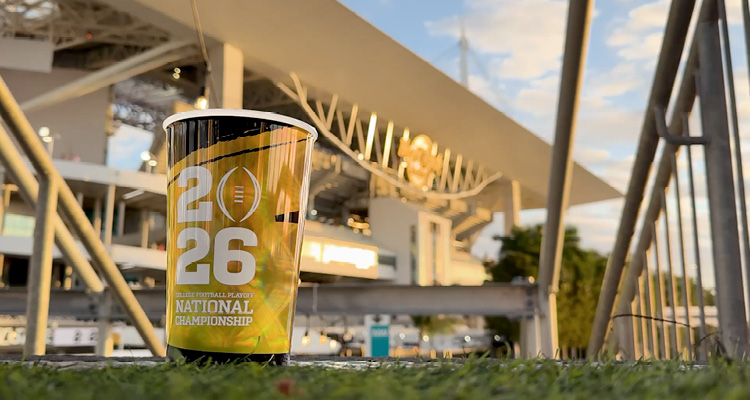
Churchill Container connects fan engagement, sustainability goals, and concession revenue through collectible drinkware
Packaging now plays a much bigger role across sports venues, theaters, restaurants, and entertainment destinations. It’s no longer just functional; it’s part of the guest experience, a revenue source, and a reflection of a brand’s environmental values.
That shift has opened new opportunities for Churchill Container (Churchill), a family-owned manufacturer that’s spent over 40 years creating custom plastic drinkware and foodservice products. But the company’s ambitions go beyond manufacturing. Today, Churchill sits at the crossroads of foodservice, entertainment, sports, and sustainability, turning cups, buckets, and containers into true brand extensions.
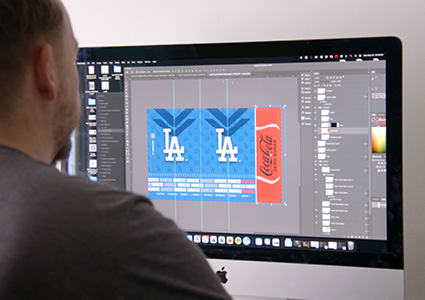
Erik Johnson, Product Director, oversees design, product strategy, and licensing. His role puts him right at the intersection of consumer trends, venue operations, and product innovation. He joined Churchill in 2007 after building a career in illustration and design; a creative background that still shapes how the company approaches product development.
“Churchill started in 1980 in Shawnee, Kansas, making and decorating plastic cups and containers for bars and restaurants. By the early 2000s, we were one of just a few established players providing collectible cups for c-stores, quick-service restaurant chains, movie theaters, and sports stadiums. Throughout the 2010s and early 2020s, we became a market leader, designing and running collector cup programs for some of the biggest events in the US,” Erik shares.
That journey has given Churchill a front-row seat to how consumers have evolved. Erik sees real opportunity in products that genuinely stand out on the table. “What really sets us apart is our approach to design and our commitment to elevating the guest experience with unique and innovative ideas. We have a full in-house creative team with decades of experience in this niche area.”
Strengthening connections
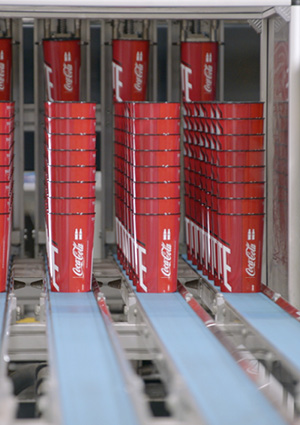
In Erik’s view, souvenir drinkware sits somewhere between merchandise and packaging. “Any simple container can hold liquid, but we like to say that we make the cups you want to keep. We think of them as ball caps or jerseys but with a more accessible cost to the consumer.” That outlook is catching on with venue operators. Collectible products stretch the experience beyond the event, generate extra revenue, and boost brand visibility long after guests leave. “Consumer behavior and market needs evolve quickly in our space. Keeping up means we must try new things. We’ve invested in modern, purpose-built production lines that let us respond to unpredictable demand and handle last-minute requests quickly, all while keeping scrap rates low,” Erik explains.
That operational flexibility has supported growth across theaters, concerts, movie releases, and live entertainment events, all facing the same challenges as stadium operators: generating guest spending and strengthening connections with their audiences.
Erik sees a common thread across the sectors Churchill serves. The opportunity is less about the venue than the relationship audiences have with the brands, teams, and experiences they follow. He says, “It’s really all about brands with a following. Anytime one of these brands is tied into food and beverage service, there’s an opportunity to offer their fans a collectible option. Sports teams are one of the most obvious examples, but musicians, movie franchises, and other special events inspire the same strong loyalty.”
The FIFA World Cup has boosted activity across Churchill’s customer base, from host venues to restaurants and bars staging watch parties. “It has certainly made for an exciting year. The influx of international fans and increase in events both in and out of stadiums has driven significant volume. Bars and restaurants around the country are hosting watch parties, and host stadiums are seeing record attendance numbers,” he points out.
Yet for Erik, the event’s significance is rooted as much in emotion as economics. “It’s a unique event in that, for many fans, it’s truly a once-in-a-lifetime experience, adding significant meaning to the memorabilia they take with them,” he explains.
Prioritizing recycled products
Alongside growth, sustainability has become a strategic priority. “As a company that uses plastic resin, we always keep this topic top of mind. Even though our production process generates very little plastic waste, we never stop working to capture every scrap. We regrind our own scrap internally and send it directly to a recycled plastics processor for use in other applications. Our plastic waste becomes another manufacturer’s raw material.”
That same thinking led to Run It Back™, a recycled-content platform years in the making. “It started way back in 2019. We wanted to find a way to both support the growing acceptance of PP as a recycled material and deliver proof that recycling works directly into the hands of consumers.” Getting there took longer than expected. Churchill wouldn’t compromise on performance. He adds, “It took every bit of those five years, trialing and testing materials and working with partners, but our breakthrough really came when we started working with PureCycle. As of June 2025, we’ve been able to offer 100 percent post-consumer recycled content in all our flagship products.”
The initiative later joined the CFP National Championship’s Playoff Green program, where the real challenge was directly engaging fans. Churchill kept the messaging invisible until the fan was already using the cup. “We wanted to create circularity you can see, but without diluting the collectible design. So, we placed the messaging on the inside of the cup. As the fan consumed their beverage, they got a pleasant surprise, letting them know that their purchase made a difference,” he explains.
Diverse customer base
While sustainability shapes product development, another dynamic is reshaping demand. Souvenir programs aren’t measured only by concession sales anymore; brands want to know how their products enter consumers’ digital worlds. “Social media is changing the way brands think about souvenir programs. It’s not just about the upsell anymore; it’s also about capturing social media attention. The brand activity generated by thousands, if not millions, of posts, reposts, likes, and comments tied to souvenirs has injected a whole new energy into these programs,” Erik observes. That shift is changing expectations around product development and design. “Consumers want tangible brand experiences that they can share virtually.”
The trend is shaping Churchill’s investment priorities as the company expands its digital decoration capabilities, while Churchill works to grow adoption of recycled-content products and broaden its presence across venue-based markets. “One of our key goals over the next five years is to expand adoption of our Run It Back™ program. It took us five years to achieve our initial goal of offering 100 percent recycled content. Now, our goal is to convert half of our customers by 2030,” Erik explains.
“We’re the leading supplier of souvenir drinkware for sports stadiums and theaters, but there’s still plenty to discover. Demand keeps growing, and in the next five years, we expect even more momentum in amusement, restaurants, and c-stores.”
Erik concludes, “Our product mix will still look a lot like it does today, but our customer base will be much more diverse.”