Explore how Holly Poultry came out the other side of the pandemic with two thriving grocery brands
With roots in the meat commodities market, Holly Poultry was built on generations of industry experience, establishing lasting relationships with suppliers and enabling it to secure the freshest products at highly competitive prices. Today, the company produces its own brand line of poultry and has grown into the leading processor and distributor in the Mid-Atlantic market. We spoke with Chief Executive Officer, Zach Fine, to learn more about the company’s brands, recent growth, and vision for the future.
“My dad started the business in 1989. After graduating from college in 2001, I joined and learned the business from the ground up, starting on the night shift in production, moving to day shift, then working through quality assurance, sales, procurement, finance, and marketing. In 2019, I was appointed CEO by the board, and walked straight into the pandemic. That period, as difficult as it was, helped us define ourselves and diversify beyond food service by establishing our retail division. Some exciting new brands emerged from that decision, and today we operate in both the retail and food service spaces. Looking back, the pandemic pushed us to become a more balanced business with strong growth on the food service side and momentum behind our emerging retail brands,” Zach begins.
Today, Holly Poultry operates multiple facilities in and around Baltimore. Several of those facilities process poultry for the food service industry, supplying national players including Raising Cane’s and Nando’s. Around 20 miles south of Baltimore, the company recently opened a new 80,000-square-foot facility dedicated entirely to its retail operation, handling private-label business as well as its own brands: One Fine Chicken and Easy Street. On the retail side, Holly Poultry supplies major grocery names including Aldi, Harris Teeter, Giant, ShopRite, and Safeway, with further brands in the pipeline.
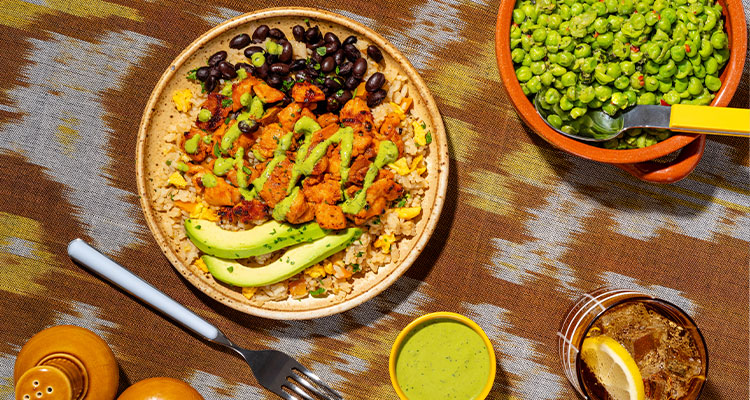
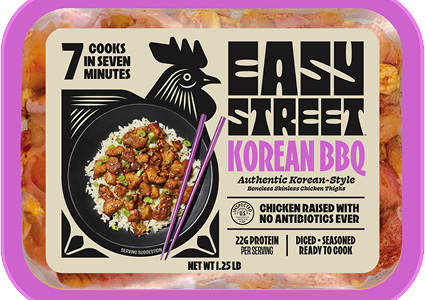
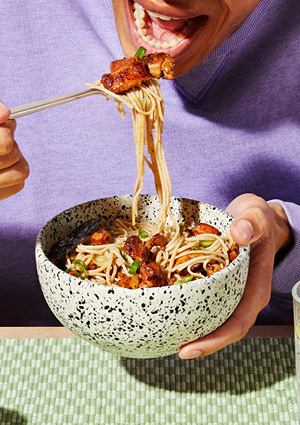
The two retail brands each occupy a targeted space in the market. Easy Street, the company’s best-selling retail brand, is a no-antibiotic-ever, boneless chicken product that is diced and seasoned in bold, street-inspired flavors, including street taco, Korean BBQ, Peruvian, and a new shawarma variety, with Asian chili crisp on the way. Easy Street was developed as a brand that most people could identify with, given that it is an affordable product that is already spiced and diced, comes together in under seven minutes, and delivers incredible flavor without the wet marinade that many comparable products carry. One Fine Chicken sits alongside it, also antibiotic-free and sourced from medium, responsibly raised birds through the company’s vertically integrated partner. Additionally, the brand aligns perfectly with Holly Poultry’s tagline, ‘better chicken for everyone’, which reflects the company’s commitment to offering affordable, high-quality products. “It has to be a win for our vertically integrated farming partners, a win for us, a win for the retailer, and most importantly, a win for the consumer,” Zach comments.
Sustainable growth
Being vertically integrated with partners like House of Rayford, a family-owned business operating multiple processing facilities across North Carolina, South Carolina, Georgia, and Louisiana, has facilitated that balance. House of Rayford brings decades of relationships with farmers and growers to the partnership, supplying the poultry that Holly Poultry then fabricates, packages, and delivers to consumers through retailers under both its own brands and private label. Having a vertically integrated partner that is also family-owned and has been operating the right way for decades, with real care for their farmers, their process, and animal welfare, results in a strong relationship based on trust. That partnership and the new facility that comes with it have allowed Holly Poultry to grow its brands significantly and offer the right price points to pass value on to consumers. Operationally, it gives the company the availability to keep saying yes to its retail partners with no stoppage in supply and no bottleneck.
Further supporting that growth, Holly Poultry recently received a significant USDA grant that is being directed straight into the infrastructure behind its new retail facility just south of Baltimore. “Those funds are going directly into the retail equipment we are installing in the new building, the facility build-out itself, and improved welfare for our employees. Every dollar of that grant is being used to support the growth of Holly Poultry’s brands, whether that is through equipment, structure, or the environment it is creating for its team. The overall goal is simply for the company to continue scaling in a way that keeps the products affordable for consumers.
Alongside that investment, Holly Poultry is also putting extra effort into optimizing the supply chain that supports its rapid expansion. Beyond poultry, which is already well managed through the vertically integrated House of Rayford partnership, the next major supply chain priority is packaging. As the business scales and grows, the team is working to transition to recyclable trays, film, and boxes across the new facility. The aim is to build an operation that is efficient and environmentally responsible, with packaging that matches the quality and values of its beloved brands.
Intentional innovation
Holly Poultry has come a long way since its early days, consistently working to improve its internal processes and services to customers. Underlying all of it is a family that has always believed in its own vision. “Our growth has been strongly supported by our family. We believe in our brands, we believe in our vision, and we believe in all 550 of our people. Outside of the strong support we have received from the State of Maryland, Maryland Commerce, and the USDA, everything else has been supported and funded by the family, because we are fortunate enough to be in a position to do that, and because we believe in where this business is going and in the future it creates for everyone who works with us,” Zach ends.
Throughout its history, Holly Poultry has shown inspiring resilience and adaptability in the face of adversity, redefining its capabilities. Instead of breaking the company, the pandemic pushed it into retail, which turned out to be exactly where it needed to go. Similarly, Easy Street and One Fine Chicken were born not out of necessity but intentional innovation. These are well-constructed brands with real staying power, backed by a strong supply chain and a farming partnership that gives the whole operation a true sense of integrity. By staying true to the founding principle that it has to work for everyone in the chain, the family-owned business is experiencing considerable growth that shows no sign of slowing.