From 50 million boxes to 50-year strategic partnerships, Oppy continues to scale the fresh produce industry
Based in the vibrant seaport of Vancouver, British Columbia, Canada, fresh produce company Oppy operates as an independent subsidiary of a publicly traded powerhouse whilst maintaining agility and entrepreneurial spirit. Initially formed in 1858 by the Oppenheimer Brothers, today it distributes over 50 million boxes of fresh fruit and vegetables every year and, in 2021, merged with industry giant Dole to form Dole plc – the world’s largest fresh produce company traded on the New York Stock Exchange.
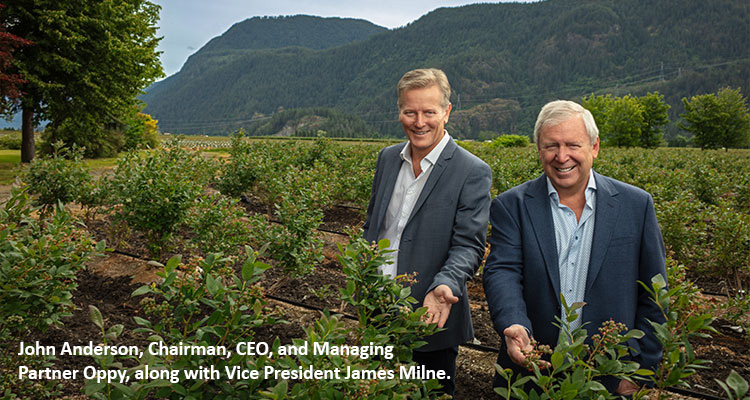
Remarkably, CEO John Anderson has completed 50 years of service with Oppy and he was recently induct-ed into the Canadian Agriculture Hall of Fame. Food Chain sits down with him to find out more about the group’s operations, spanning 30 countries and 19 global offices. “What began more than 165 years ago as a vision to connect people with the world’s finest harvest has evolved into one of North America’s most respected fresh produce companies,” John opens. “We grow, market, and distribute fruits and vegetables sourced from every continent. We’ve introduced North American consumers to iconic produce items including Granny Smith, JAZZ, and Envy apples, as well as green and gold kiwifruit. More than 130 years ago, we were even the first to import Japanese mandarins, so we’ve continued this approach.”
John explains that introducing such a wide variety of fruits helped elevate taste, quality and health benefits as key purchase drivers, ultimately shifting customer expectations. “Consumers became more adventurous and more discerning,” he continues. “That shift raised the fresh produce assortment at retail establishments and encouraged healthier eating habits. Innovation has permanently reshaped the market, and we are proud to have been at the forefront, which is now extending past apple and kiwifruit and into berries, stone fruit, and most notably, grapes.”
Alongside the introduction of different fruit varieties, Oppy operates with dedicated business units. Each product category functions from one unit and is led by a vice president or director fully accountable for the health, growth, and long-term strategy of a particular portfolio. “This structure allows us to combine deep category expertise with entrepreneurial agility,” John explains. “Our portfolio spans almonds, apples, avocados, berries, cherries, citrus, grapes, greenhouse vegetables including vertically farmed lettuce, kiwifruit, stone fruit, and other specialty items.”
Prioritizing partnerships
The company also developed a bespoke internal IT system called Optimo, which John reveals was born from necessity. “In the early 1990s, a major retail partner requested a single consolidated invoice for mixed truckloads carrying different products sourced from multiple countries,” he reflects. “At the time, our systems required separate invoices for each individual item. We developed Optimo to streamline billing, enhance transparency, and provide full supply chain visibility. Optimo is an important point of differentiation because it provides precise visibility to products moving through our supply chain and enables well-informed real-time decision making.”
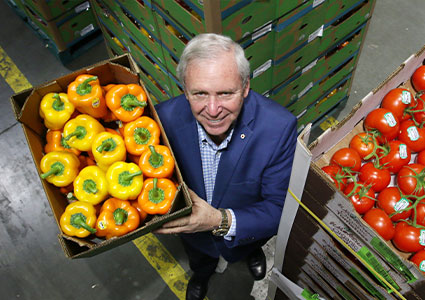
Not only has Oppy implemented unique technological advancements, but it also adheres to numerous sustainability initiatives, focusing largely on Fair Trade Certification. As a market leader in Fair Trade Certified produce in North America, its portfolio includes sweet bell peppers, cucumbers, grapes, berries, nectarines and citrus fruit, and the company has helped generate over $10 million in premiums – directly supporting the quality of life in farming communities since 2013.
Furthermore, it has forged greenhouse partnerships dating back to the 1950s. “We originally aligned with
greenhouse growers on Vancouver Island and British Columbia’s lower mainland,” adds John. “Green-houses offer protection from weather, pests and other elements, enabling high quality, robust flavor and yield consistency. Our current offering includes Fair Trade Certified peppers from Divemex, a grower who pioneered greenhouse production in Mexico and brought the first Fair Trade Certified peppers to North America over 20 years ago.”
Hyper-local production
Oppy has recently become involved in vertical farming, an innovative method of producing higher yields on a smaller footprint, which is still finding a foothold. “One of our primary challenges has been achieving the right balance between yield optimization and production costs in an indoor environment,” John discloses. “The economics must be carefully managed to ensure long-term viability. That said, the benefits are compelling – vertical farming enables hyper-local production and uses significantly less water and land than typical field production.”
Collaboration is key for Oppy – the Dole brand integration represents strategic opportunity, and its partnership with Ocean Spray spans 50 years, starting with their iconic fresh cranberries. “We are currently integrating Dole Diversified North America operations into Oppy, while expanding the Dole brand,” elaborates John. “The Dole brand is the most recognized fruit brand in the US and carries significant consumer trust. Oppy is a ‘house of brands’ which includes Zespri, Envy, Ocean Spray, Blue Diamond as well as many grower brands, so adding Dole provides another popular label. Additionally, we added berries, citrus and grapes to the Ocean Spray branded line about ten years ago. We have since leveraged Ocean Spray’s strong, center store presence and brand equity to build a strong retail and consumer following.”
Oppy’s ‘must win’ areas for 2026 include disciplined execution, strengthening its core partnerships and positioning the business for sustainable growth. “Woven into our approach is the Oppy brand promise ‘expect the world from us.’ Our aim is to always deliver the excellent service that sets us apart,” John states. “I anticipate the year ahead will bring uncertainties – weather, market or geo-political. We’ll constantly support our grower partners, especially those who may be financially vulnerable, while continuing to be vigilant about tariffs and other trade impacts.”
Innovation meets integrity
Further afield, the company’s long-term vision targets 68 million cartons of fresh produce annually. “Over the next five years, we aim to solidify our position as a global leader in fresh produce, recognized for innovation, sustainability, and category leadership,” John concludes. “I anticipate Oppy growing steadily within each of our product categories. We forecast that kiwifruit, our largest category, will continue to grow the fastest, and our avocado category is also set to increase quickly. Measured growth will occur throughout our portfolio as we aim to market over 68 million cartons of fresh produce and generate over $2 billion in sales in 2030.”
From importing Japanese mandarins 130 years ago to integrating Dole Diversified North America whilst maintaining entrepreneurial independence, Oppy’s story reinforces that scale and agility aren’t mutually exclusive. From 50 million boxes today to 68 million cartons by 2030, the fresh produce firm proves that proprietary systems like Optimo, 50-year partnerships, and $10 million in Fair Trade premiums create the foundation for sustained growth – even when uncertainties loom. Plus, John’s Canadian Agriculture Hall of Fame induction recognizes what happens when innovation meets integrity. In his own words: you can expect the world from Oppy.