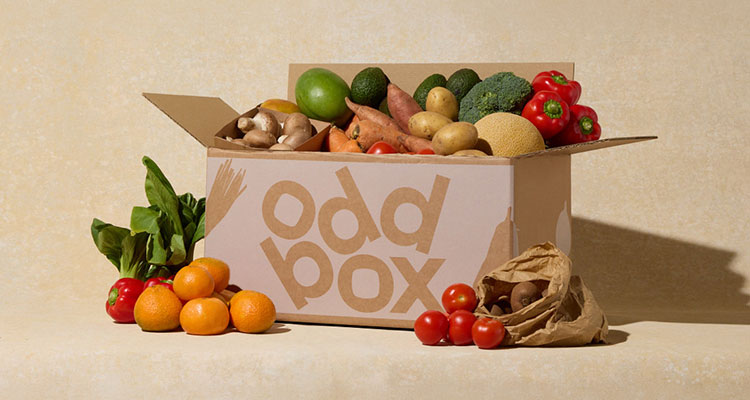
From rescued tomatoes to food waste solutions, Oddbox is reshaping how Britain shops, cooks and eats
Emilie Vanpoperinghe didn’t initially set out to build a business. However, following a trip to Portugal, that is exactly what happened – a personal experience compelled her to start a rescue mission, saving food that would otherwise go to waste and delivering it to customers. After nurturing the simple idea, Emilie and her co-founder Deepak launched Oddbox in 2016, beginning with 20 customers in London and distributing the fruit and vegetables in their own car. Fast forward ten years, Oddbox has expanded considerably and covers an impressive 70 percent of the UK.
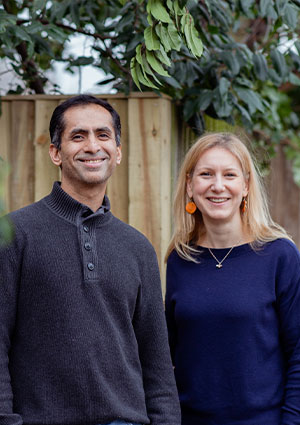
“It started with a very simple moment,” Emilie tells Food Chain. “Tasting an ugly but incredible tomato in Portugal and wondering why I couldn’t get such tomatoes in the UK. It made me realize how disconnected we’ve become from food. We only ever see perfection on shelves, so we assume anything else isn’t good enough.” After conducting further research, she found some shocking statistics. “I discovered that 40 percent of the food we produce never gets eaten and half of the waste happens even before it reaches our kitchens – not because it’s bad, but because it doesn’t fit supermarket standards. That felt completely irrational to me.” This realization led to the creation of Oddbox, which today has delivered over ten million boxes and rescued over 65,000 tons of food – the same weight as 10,000 African elephants!
Evolving from an operation to save ‘wonky’ veg to becoming a trusted sustainable UK food brand, Oddbox now has a broader mission. Not only is it helping people eat well with all the produce already available, but the company is also reducing waste across the supply chain – not just on farms but in people’s homes, too. “50 percent of food waste happens at home and we’re also tackling other forms of waste, like plastic waste,” continues Emilie. “Additionally, we’re committed to reconnecting people with food, and the connection and enjoyment that comes with eating. I believe that’s what food is all about. It’s not just fuel. It’s about building a movement around a different way of eating – one that’s grounded in nature, celebrates creativity in the kitchen and makes the most of our limited resources.”
Offering only fruits and vegetables at the beginning, Oddbox has now grown its proposition beyond produce with a range of refillable products and ambient rescued goods, tackling packaging waste alongside food waste. Starting with ‘surprise’ veg boxes based on the items that needed rescuing, Emilie reveals what inspired the company’s diversification. “We realized that, for part of our community, this meant actually creating waste in their home – for example, if we sent too much beetroot, or a cabbage and they didn’t know how to cook it,” she explains. “That’s when we introduced Pick Your Own, letting customers swap the produce in their box they didn’t want for another they did.” Understanding that customers cared about the wider impact of food waste, Oddbox introduced its selection of refillables, based on the ethos of fully harnessing the Earth’s resources. “We stay supply-led, rescuing only what already exists and prioritizing low-waste formats while working exclusively with partners and suppliers who share our ethos and values.”
Low-waste weekly essentials
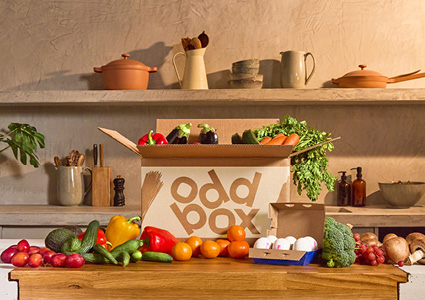
Balancing mission with commercial reality, Oddbox currently focuses solely on its direct-to-consumer channels where it successfully maintains healthy margins and stronger relationships with customers. “The pandemic was both a boost and a trip,” discloses Emilie, regarding the company’s present focus and approach to decision-making. “Demand surged overnight, growth accelerated artificially and then reality hit post-Covid with high churn, as people went back to shopping in supermarkets, returned to the workplace and started eating out again. Since then, our focus has shifted to retention over acquisition, delivering more value to each customer and building a proposition that is scalable and financially sustainable.” Long-term partnerships with charities such City Harvest and FareShare have also been a key part of Oddbox’s operations. “We donate any extra produce to FareShare weekly, who redistribute to charities and community groups, providing nutritious meals to people in need,” highlights Emilie. “We’ve donated the equivalent of 1,967,526 meals so far.” In addition, it has recently partnered with St Ewes – the only B-Corp certified egg packer in Europe – adding free range rescued British eggs as an option to food boxes.
“We want to make shopping with Oddbox as easy and convenient as possible, helping our community shop in a low-waste manner for their weekly essentials, so we will be introducing more products throughout the year,” Emilie notes, regarding plans for the remainder of 2026. “We will also be launching a low-waste meal solution for people wondering how they can turn certain vegetables into meals, making it easier for people to eat well while wasting less.” This month sees the launch of an exciting new app, which Emilie says has been planned for the past four years: “The majority of our community customize their box every week and the app will make it easier for them. We’re also planning to add recipes and community engagement features.”
One standout statistic is driving Oddbox to become the UK’s leading climate-conscious meal solutions provider, Emilie reveals: “In the UK alone, around 3.3 million tons of food are wasted on farms every year, 2.9 million tons of which is edible food. That’s about 6.9 billion meals.” The company aims to triple its impact over the next five years by rescuing 150,000 tons of food, while continuing to change how people shop, cook and eat.
“Ultimately, our goal is not just to reduce waste but to inspire systemic change within the food industry,” Emilie concludes. “We’re committed to collaborating widely and transparently, ensuring our impact reaches well beyond our immediate customers and partners. Sustainability isn’t about perfection, it’s about progress. At Oddbox, we’re passionate about enabling everyone to take small, meaningful steps towards a better planet through their everyday food choices.”