From spacecraft to supermarket, how Nutella stole the Artemis II spotlight
Subscribe to our free newsletter today to keep up to date with the latest food industry news.
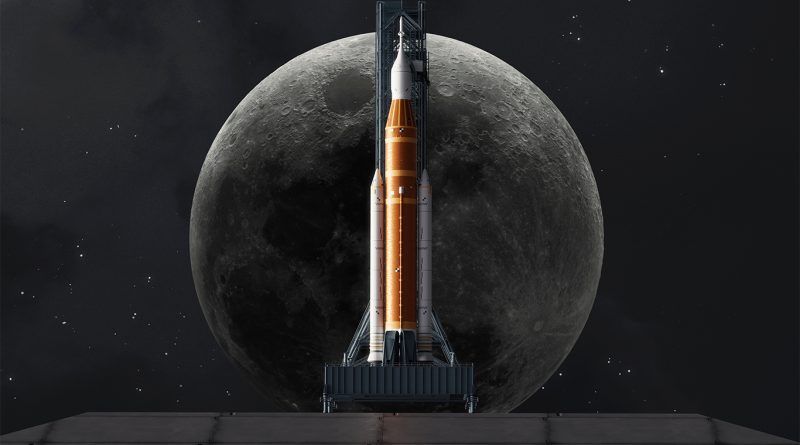
The Artemis II mission was designed to mark a defining step in NASA’s return to deep space exploration. Crewed by commander Reid Wiseman, pilot Victor Glover, and mission specialists Christina Koch and Jeremy Hansen, the Orion spacecraft carried humans farther from Earth than any mission since Apollo 13. At a distance of 252,752 miles, the crew not only broke a 56-year-old record but also executed a series of technically complex manoeuvres, including a communications blackout behind the Moon and the observation of a solar eclipse from lunar orbit.
Yet, in a moment that underscores the evolving relationship between space exploration and consumer culture, one of the most memorable highlights came not from a scientific instrument or navigational milestone, but from a jar of chocolate-hazelnut spread.
Just minutes before the mission surpassed the Apollo 13 distance record, a tub of Nutella drifted into view during a NASA livestream. Suspended in microgravity, the jar rotated slowly before settling into a position that placed its label squarely in frame. The lighting was ideal, the composition near perfect. For viewers on Earth, it resembled a meticulously staged advertisement. In reality, it was anything but.
The juxtaposition of high-stakes exploration and a familiar pantry staple created a moment that resonated far beyond the aerospace community. It offered a reminder that even in the most advanced technological environments, human routines and comforts remain central.
The anatomy of an accidental marketing moment
From a marketing perspective, the Nutella incident is a case study in the power of authenticity. Traditional advertising campaigns are built on careful planning, controlled environments and significant financial investment. Product placements, particularly those designed to achieve global reach, can cost brands millions.
In contrast, this moment was entirely organic. There were no contracts, no staging and no creative direction. Yet the outcome delivered what many campaigns strive for but rarely achieve: universal attention and positive sentiment.
The visual itself played a critical role. In microgravity, objects move with a smooth, almost cinematic quality. The jar’s slow rotation and eventual alignment with the camera created a sense of deliberate presentation, even though it was purely incidental. Combined with the context of a historic mission, the result was both visually compelling and narratively rich.
Livestreaming amplified the effect. Unlike pre-recorded content, livestreams carry an inherent credibility. Audiences understand that what they are seeing is unedited and immediate. This authenticity increases engagement and trust, making any unexpected moment more impactful.
For food brands in particular, the setting added another layer of significance. Space missions impose strict constraints on what can be consumed. The presence of Nutella as part of a curated menu of 189 approved items signals both its practicality and its role as a comfort food. In an environment where crumbs are prohibited and most meals are adapted for zero gravity, spreads offer a convenient and safe option.
Brand response and the amplification effect
While the initial moment was accidental, the response from Nutella’s parent company, Ferrero, was anything but passive. Recognising the opportunity, the brand quickly engaged with the narrative, issuing statements that balanced humour with appreciation for the mission.
Ferrero North America described the moment as being “over the Moon,” a phrase that neatly tied the brand to the mission’s broader achievements. The company’s global channels followed suit, sharing clips and imagery that highlighted the floating jar while reinforcing its brand identity.
Social media played a decisive role in extending the lifespan of the घटना. Nutella’s posts leaned into the playful nature of the incident, positioning the product as a companion to human exploration. Campaign elements encouraged audience participation, including prompts inviting users to imagine what they would bring into space.
NASA itself contributed to the amplification. By acknowledging the moment in its own communications, the agency validated the public’s reaction and further blurred the line between institutional messaging and popular culture. This interplay between brand and agency created a feedback loop, driving additional engagement across platforms.
What distinguishes this case is the speed and coherence of the response. In the digital era, the value of a viral moment is closely tied to how quickly it is recognised and leveraged. Ferrero’s ability to act in real time ensured that the brand remained central to the conversation rather than a peripheral beneficiary.
What this means for marketing in the space economy
As space exploration becomes increasingly commercialised, the boundaries between scientific missions and consumer experiences are likely to continue shifting. Private companies, commercial partnerships and the broader space economy are already introducing new opportunities for brand visibility.
Food, in particular, occupies a unique position within this landscape. It is both a necessity and a source of psychological comfort. As missions extend in duration and distance, the role of familiar products will become more pronounced. This creates potential for brands to align themselves with narratives of exploration, resilience and human connection.
However, the Nutella moment also highlights the limitations of traditional approaches to brand integration. Its success was rooted in spontaneity. Attempting to replicate such moments through deliberate placement risks undermining the authenticity that made it effective.
For marketers, the lesson is less about seeking direct involvement in space missions and more about understanding the conditions that allow organic exposure to flourish. This includes investing in brand recognition, maintaining a strong digital presence and being prepared to respond rapidly when opportunities arise.
There are also considerations around ethics and regulation. As commercial interests expand into space, questions will emerge regarding the appropriateness of advertising in publicly funded missions. Balancing commercial opportunities with the integrity of scientific exploration will be an ongoing challenge for agencies and partners alike.
The broader implication is that marketing is entering a phase where control is increasingly decentralised. Moments of cultural significance can emerge in unpredictable ways, often driven by the convergence of technology, media and human behaviour. Brands that succeed will be those that can navigate this complexity with agility and restraint.
In the case of Artemis II, a simple jar of Nutella became a symbol of this shift. It demonstrated that even at the edge of human exploration, the most powerful connections are often the most familiar.
Source: