
How Bill’s has evolved over the last 25 years while staying true to its authentic, colorful spirit
From a single shop in Lewes to one of the UK’s most recognizable all-day dining brands, Bill’s has spent the last two and a half decades carving out a unique place on the British high street. Known for its casual atmosphere and welcoming spirit, the company has built a loyal following while maintaining the independent identity that has defined it since the beginning.
Now proudly celebrating its 25th anniversary, Bill’s has evolved into one of the UK’s best-known casual dining chains – the kind of place people go for brunch with friends, a relaxed weekday dinner, or pancakes on a Sunday morning. In light of this anniversary, Food Chain sits down with Tom James, Bill’s Managing Director, to uncover how the business continues to refresh its menu, branding, and guest experiences.

“Bill’s has an interesting origin story,” Tom begins, reflecting on the business’ heritage. “Bill, whose father and grandfather were greengrocers, used to sell fruit and vegetables in Lewes. There was a flood that affected a nearby charity shop, meaning that the unit became available, so Bill opened a café in there. It then became so popular that he bought the shop next door. Before long, Bill had grown the business to three sites: Lewes, Brighton, and Reading. It was at that point that Richard Caring visited the Brighton site. He liked the eclectic design of the restaurant and its busy, buzzing atmosphere, saw the potential and ended up acquiring the business. It then grew over the next 20 years up to its peak-80 sites pre-Covid.
“With Covid, however, Bill’s went through a rocky stage and some of those sites subsequently closed,” he says. “Our goal over the last four to five years has been to get Bill’s back to its original best. Presently, we have 49 restaurants throughout the UK and are set to open our 50th site – our first airport site – in Heathrow, Terminal 2.”
Building brand loyalty
It’s no secret that the hospitality industry has faced an onslaught of macroeconomic challenges over the last six years, but despite those ongoing difficulties, Bill’s continues to flourish. This year, the 25th anniversary milestone is not only a celebration of how far the business has come, but also of its ability to evolve alongside changing customer tastes and habits.
“The other thing that’s been important is that we’re not tied down to any particular cuisine or genre of food, so we can be flexible with market trends,” Tom reveals. “Guests’ tastes have been more dynamic than ever over the last five years, so it’s especially important to be innovative and relevant. It’s exciting for our food development and marketing teams because they can constantly experiment with new ideas, cuisines, and demographics.
“When you have a business to survive for long periods of time, you must stay relevant. We’ve identified that families still love going out, but can’t afford to do so as frequently anymore, so we’ve been very conscious of making sure that we offer good value,” Tom elaborates. “For example, we launched ‘Kids Eat Free’ four years ago and have given away over 2.5 million meals to kids in crisis.
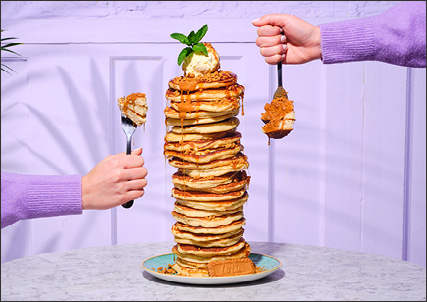
“We’ve also moved quite considerably to appeal to Gen Z,” he adds. “We’ve acknowledged that a lot of the Gen Z demographic are students who don’t have a huge amount of disposable income, so that’s why we launched our £5 bottomless pancakes deal on Fridays – you can come in and eat as many pancakes as you can in 90 minutes for just £5. It’s been hugely popular. Last year, our set graduation menu was the most popular it’s ever been, which shows that we’ve been able to build up brand loyalty amongst the students.
“There’s a lot of science behind Bill’s menu development. Around two years ago, we built what we refer to as the ‘menu matrix’, which incorporates all our sales data and food margin data so we can identify trends. Last year, we created an ‘emotional heat map’, where we searched for 200 key emotional words across tens of thousands of reviews that people have left us on TripAdvisor and Google. That then gave us a clear pattern on how we can adapt and change our menu,” Tom explains. “This summer, we’re launching a whole new kids’ menu which is totally customizable. We’ve done several workshops where we’ve learned that if a child can choose their own dish and make the recipe they want, they are far more likely to enjoy it and eat it all.
“Last year, we launched delivery for the first time through an exclusive partnership with Deliveroo, which has been phenomenal for us. We do ‘Dinneroo’ with Deliveroo, which is where customers can feed the family for £25. That presents new opportunities for us, such as during the World Cup where people are at home watching the football rather than in the restaurants. We’re working on a number of different burgers inspired from places across the world that people will be able to eat at home whilst supporting their team, which is also exciting,” Tom enthuses. “Alongside that, we’re launching our retail range. We’re launching some bespoke products, such as chutneys, jams, lemon curds, pickles and chilies, and our pink lemonade. We’re also investing in a new campaign this summer called ‘Bill’s Bees’ – all our restaurants are going to have bee-friendly plants, and we’re going to create some kids’ storybooks too. It’s going to be fun.”
Organic growth strategy
As Bill’s embarks on its next chapter, its journey highlights the value of staying adaptable while remaining connected to the qualities that made the brand popular in the first place.
“Our aim for the next five years is to continue stabilizing and growing the business. We have a phenomenal retention and internal promotion rate, with over 50 percent of our Head Office team having come from our restaurants. Sales have been encouraging and we’re hoping that that trajectory can continue,” Tom says, concluding our conversation. “It’ll be challenging in the current market, but if we keep investing in technology and innovation to combat the rising costs, keep attracting new and existing guests, and grow the business into different revenue streams, then we’ll be happy.”