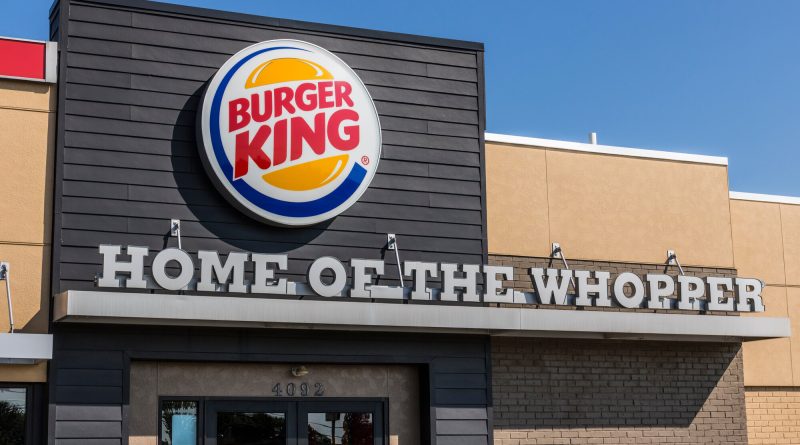
How Burger King is using the Whopper to revive US sales
Subscribe to our free newsletter today to keep up to date with the latest food industry news.
Burger King spent years trying to regain ground in the US fast-food market. Its latest results suggest the work is starting to pay off.
US comparable sales rose 8.5% during the second quarter of 2026, a sharp acceleration for a chain that has spent much of the decade rebuilding restaurants, franchisee economics and its brand proposition. The performance put Burger King ahead of its two largest burger rivals during the period, with McDonald’s posting far slower US growth and Wendy’s reporting a decline.
The most visible part of that recovery sits at the center of Burger King’s menu. Earlier this year the company made its first substantial changes to the Whopper in close to a decade, updating the bun, mayonnaise and packaging without altering the basic formula that has defined the product for generations.
The result offers a useful lesson for mature consumer brands. Burger King did not try to invent a new identity. It took one of its most recognizable assets and made the execution around it better.
Now the company faces a more complicated test. A stronger burger can bring customers through the door, but sustained growth depends on what happens once they arrive.
The Whopper gave Burger King a clearer reason to compete
Burger King’s recovery has been building for several years under its Reclaim the Flame program, which directed money toward advertising, restaurant equipment, digital systems and remodels. The aim was less glamorous than launching a stream of attention-grabbing menu items. Burger King needed to repair the fundamentals of a large franchise system.
That work created room for the company to turn back toward the food.
In February Burger King introduced an updated Whopper featuring a more premium bun, revised mayonnaise and box packaging intended to protect the sandwich between the kitchen and the customer. Fresh vegetables and the flame-grilled beef patty remained familiar. The changes were designed to make an established product more reliable rather than replace it.
That distinction matters. Restaurant chains face constant pressure to generate traffic through limited-time products and promotions. Those tactics can produce bursts of demand, yet they do not necessarily strengthen what customers associate with a brand.
The Whopper carries different economics. It is already embedded in Burger King’s identity, marketing and kitchen system. Improving it means investment can reinforce a product customers recognize instead of requiring the company to build awareness from scratch.
Early performance indicates that the approach is working. Sales of the updated Whopper are reportedly about 20% above those of the previous version.
Burger King has paired that product work with value offers, marketing and restaurant investment rather than treating the Whopper as an isolated fix. The business finished 2025 with 6649 US restaurants, and its modernization program is still progressing across that estate.
This combination helps explain why the turnaround is more interesting than a successful product relaunch. Burger King is using the Whopper as an anchor for a broader attempt to make thousands of restaurants more competitive.
Sales growth suggests customers are reconsidering Burger King
The second-quarter numbers give that strategy more credibility.
Burger King US comparable sales increased 8.5% in the quarter ended June 30, according to Restaurant Brands International. Consolidated comparable sales across RBI increased 3.8%.
The competitive comparison is striking. McDonald’s reported 0.8% US comparable sales growth for the period, and Wendy’s reported a 7% decline in US same-store sales.
One quarter does not settle the burger wars. It does show that Burger King has regained momentum at a time when value has become more contested across fast food.
For years, quick-service restaurants benefited from a simple consumer assumption: eating there was inexpensive. Higher menu prices have weakened that advantage and brought fast-food chains into closer competition with convenience stores, grocery prepared foods and some casual restaurants.
That puts more pressure on perceived value. Price remains part of the equation, but value can include portion size, food quality, order accuracy, speed and the condition of the restaurant.
Burger King’s current strategy touches most of those areas. It has upgraded the flagship product, invested in physical locations and run value-oriented offers. The company is now turning toward a variable that can be harder to standardize across a franchise network: hospitality.
That shift may prove more important than another menu launch.
Nearly all Burger King restaurants are operated by independent franchisees. A product specification can be documented, ingredients can be standardized and packaging can be redesigned centrally. The human interaction at the counter or in the dining room is far less predictable.
For a brand trying to win back customers, that variability becomes a business problem.
The next phase of the turnaround depends on what happens in the restaurant
Burger King’s response is the Your Way Champion, a reworked restaurant leadership role built around the guest experience.
The company developed the initiative after gathering feedback through a listening program that invited customers to contact Burger King US and Canada President Tom Curtis directly. Customers repeatedly asked for someone inside the restaurant who could address a problem quickly.
Your Way Champions are intended to fill that role. They are identifiable in restaurants, check orders, help with customization and act as a point of contact when something goes wrong.
Burger King is pairing the program with the Whopper Guarantee. Customers dissatisfied with a Whopper can have the order addressed and use a code to receive a free classic Whopper on a later visit.
The mechanics are straightforward. The business significance is more substantial.
Service recovery has long been part of restaurant management, but Burger King is turning it into a visible element of its brand proposition. That creates accountability at the restaurant level and gives customers a clear route when execution falls short.
It fits the stage Burger King has reached in its recovery. Once the food improves and restaurants receive investment, poor service becomes more conspicuous. A badly prepared order or unresolved complaint can undermine much of the money spent on marketing, remodeling and product development.
Hospitality is harder to scale than a bun specification. It depends on training, staffing, franchisee participation and managers who can make decisions in real time. Results can vary from restaurant to restaurant and shift between dayparts.
That is precisely why it represents a meaningful test for Burger King.
The Whopper has given the chain a stronger product story and the latest sales figures suggest customers are responding. Restaurant modernization has improved another part of the proposition. The next question is whether Burger King can make the experience surrounding the food as dependable as the food itself.
For an established restaurant brand, that may be the harder part of the comeback. The Whopper can persuade a customer to give Burger King another visit. The quality of that visit will decide whether the customer comes back again.
Source