
How food supply chain teams can reduce documentation delays
While much modern paperwork and documentation in the food supply chain is digitalized, there are still delays in handling and processing that can cause bottlenecks for all teams and companies involved.
A TraceGains survey of 165 food safety, quality, and innovation leaders, reported by SupplySide, found that 69 percent of companies still depend on manual systems such as spreadsheets, fax, and email, even though 82 percent identify technology adoption as a top priority. Paper sits at the slow end of that spectrum. Where wet signatures and physical documents are still required, human error, missing paperwork and incomplete forms compound into delays the rest of the chain has to absorb.

Document delay triggers are caused by inefficient processes, not a lack of tools. Let’s explore how they happen, specifically, in the food supply chain.
Why documentation delays happen in the food supply chain
The exact reasons for documents slowing down supply movement in the food industry vary from firm to firm. However, any of the following could occur, potentially causing logistics and sign-off lags:
- Food safety auditing may require physical paperwork and wet signatures. If this documentation is mishandled, incorrectly signed, or even lost, supplies are not allowed to move.
- Multi-party confusion (i.e., packers, carriers, and retailers all using different documents) may overcomplicate how paperwork is handled and processed, as there’s no single source of truth.
- Legacy approval processes (i.e., paperwork that requires one specific signature or sign-off from a specific department) may slow down how quickly shipments can move.
- Extensive compliance and regulatory mandates require deeper due diligence from supply chain partners when trading across borders. Depending on the number of parties involved and details required, this can extend and potentially complicate supply movements.
- Manual re-entry of data into documents between separate systems can, again, cause confusion, and potentially lead to investigation into the veracity of data captured and signed off on.
Crucially, legacy document checking and sign-off processes exist for both cross-border legal and food safety reasons. There are many corners that simply cannot be cut, while at the same time, food and drink perishability is at stake.
The FAO, referring to UNEP statistics, states that around 13.2 percent of food, globally, is lost in supply chains before it even reaches retail. It’s a figure that paperwork delays are contributing to.
Some of this is fixable now rather than after a full rollout. Teams can cut a whole layer of re-keying by making shared documents fillable PDFs rather than scans or printouts, so partners complete fields directly and the data arrives structured. It works best as one component of a wider plan, which is easier to build once you know where the slowdowns actually sit.
Where teams usually get slowed down
The potential slowdown issues raised above can occur at various points on a food supply chain. Teams may get slowed down with:
- Customs and cross-border clearances, where manual data entry is required, and where delays may occur in securing certificates to assure food safety
- Supplier onboarding checks, where new partners are manually checked for tax and safety compliance
- Human-led reconciliations of incoming packing lists with receiving logs
- Quality sign-off checkpoints
- Cold-chain handovers between environments
Again, these slowdown points struggle with delays as a result of both ingrained, manual processes, and necessary regulation requirements. There are several ways in which these points can be mitigated, but first, it’s worth considering how wider food operations can be affected.
How these delays affect food operations
Beyond supply chain slowdowns, perishable goods will naturally need to be thrown away if delays extend to a point where use-by dates are exceeded. Studies already show that food wastage is occurring as a result of inefficient packaging strategies, meaning it is already a major issue due to other factors.
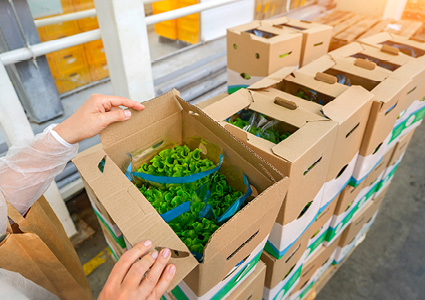
Documentation delays can also lead to retailer delivery windows getting missed, fines being applied if contracts are not upheld, and even trucks filled with perishable goods getting left idle at loading docks. Global food waste, in 2026, is set to reach an estimated $540 billion, with costs spread across the supply chain. While much of these costs may not so obviously be caused by documentation slowdowns, it is still a contributing factor.
Retailers left without food and beverage supplies when expected struggle with empty shelves and disappointed customers. The knock-on effect ultimately impacts end consumers in need of daily provisions, which transforms the issue into one of human need, not just business impact.
Simple ways to keep documents moving
Digitalization is a process that takes considerable time and effort to plan and roll out, but there are several stepping stones food supply businesses can use to ensure documents move as efficiently as possible in the meantime:
- Standardizing documentation for shipments and cross-partner communications means everyone is on the same page and knows what to prepare for every order
- Moving manual documents to PDF reduces reliance on paper documents which might go missing, get spoiled, or filled improperly, leading to delays as clarification is sought
- Standardizing and sharing documentation review checklists between partners ensures that all direct vendors are handled in the same way and that everyone has the same expectations
- Pre-clearing all paperwork before dispatch cuts down any unnecessary document queries at the actual point of dispatch or intake
- Assigning single owners to documents boosts accountability and ensures that there’s little confusion between versions and data ownership, which can result in unnecessary investigation further down the line
- Using automated workflows and ERPs, down the line, streamlines conversations, document capture, and storage (removing the need to look for physical documents and scour long email chains)
Crucially, there will always be points in food supply chains where manual paperwork and document checks are necessary. Therefore, to reduce unnecessary delays and slowdown, businesses need to focus on fixing processes before assuming choosing the right tools will do all the hard work.
From there, a careful rollout of automation and fully digitalized document trails will keep crucial information signed off and moving, with the aim of reducing food spoilage and keeping clients happy. Time will tell how many businesses move in the automation direction, but there are fewer and fewer excuses to let trucks sit idle in 2026.
Emily Shaw
www.docfly.com
DocFly is an online PDF platform designed to make creating, editing and managing documents simpler and more accessible. Its browser-based tools enable users to edit, convert, merge, split, sign, compress, and password-protect PDFs without downloading specialist software. Founded by UK software developer Emily Shaw, DocFly has grown into a global service used in more than 180 countries, supporting professionals, businesses, educators, and students.