
How manufacturers can turn one-off training into daily discipline. By Tiffany Donica, Director of Industry Consultants, SafetyChain Software
The first time I saw a food plant offering a signing-on bonus for an hourly employee, it was clear the industry’s labor problem wasn’t going away any time soon. Signing bonuses had been associated with senior or highly specialized roles, but now they were appearing on the plant floor, where manufacturers were competing for people to perform the essential work that keeps production moving. That moment stayed with me not only because it was a clear sign that employee turnover was increasing in the industry, but it laid bare the fragile link between worker knowledge and food safety. According to one 2025 analysis, food processing has an average annual employee turnover rate of 36 percent, the highest among all manufacturing sectors, and every person who leaves takes valuable practical knowledge with them. It’s not really feasible to expect their replacements to quickly pick up where they left off and learn the ins and outs of how the plant operates – but perhaps it should be.

When businesses in any sector are dealing with high turnover, onboarding can begin to feel like a permanent state of operation. There’s a reason they call it “churn.” Supervisors find themselves explaining the same processes over and over again while still managing production targets, quality demands, and the needs of more experienced employees. New hires and temporary workers still need to be trained and qualified before they can perform critical food safety procedures, but the standards they are trained to follow cannot change based on tenure. Whether an employee has worked on the line for ten years or is brand new, the expectations and procedures need to be clear, consistent, and followed the same way every time.
Training isn’t the problem, or the solution
Training isn’t the issue. Most food manufacturers already invest a great deal of time and resources in getting their employees through it and keeping them up to speed. But when they leave the training room, walk onto a busy production floor, and start applying what they’ve learned while the line is moving – that’s a different story. A presentation can explain the principles behind allergen controls or sanitation procedures, but putting those lessons into action during a busy shift with noise, time pressure, unfamiliar equipment, and dozens of other details to consider, and even a capable new employee won’t be able to match their predecessor on day one.
In a 2026 Global Food Safety Training Survey by Campden BRI, it was revealed that nearly 95 percent of food plant leaders believed they understood how to build and sustain a strong food safety culture, but more than half still relied on paper to manage training records and had no data-driven approach to assessing training effectiveness. A signature on a training record might put a check in the box, but it doesn’t tell us whether an employee is ready to recognize a non-conformance or deviation three weeks later. Refresher training has an important role, but daily reinforcement is what keeps things aligned. Plants are now having to figure out how to deliver and manage that daily reinforcement.
Put guidance where the work happens
Knowledge is retained by people, but it should be retained by the institution. That’s what much of this boils down to. A new hire shouldn’t have to remember every detail from their training or track down the one experienced veteran on shift who knows the “shadow rulebook” of how a particular task is meant to be completed in that particular plant. Current standard operating procedures (SOPs), visual references, and task-specific instructions should be easy to access at the point of work, written in language employees understand, and clear about what to record and when to escalate a concern. This is especially important for temporary and seasonal workers, who may have only a short window to learn the job before stepping onto the line.
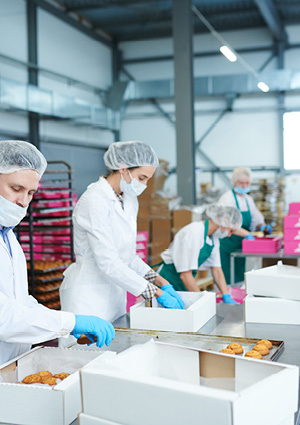
Digital platforms can bring those instructions directly into the workflow and guide employees through each required step, creating consistency without expecting supervisors to stand beside every person throughout every task. If a process changes, the latest instruction can be made available across shifts without outdated paper copies continuing to circulate. This gives every employee a reliable path through the work, whether it’s their first shift or their hundredth, while preserving the practical knowledge that might otherwise walk out the door with every experienced colleague that retires or moves on.
Visibility becomes everything
Clear instructions are vital, of course, but supervisors also need a clear line of sight on what is happening at the start of every shift. One missed check might be a basic oversight, but the same check being missed over and over again on a particular line points to an operational issue that needs to be investigated. Perhaps the instruction is unclear, the scheduling is poorly implemented, or there aren’t enough hands on deck at a given time. When records are confined to a spreadsheet and glanced at several days later, the opportunity to take corrective action has already passed and the plant has put itself at risk.
Real-time digital records allow supervisors to see incomplete tasks, late checks, and recurring non-conformances while the details are still fresh in the mind and boots are still firmly on the ground. They can follow up with the employee, understand what happened, and decide whether the response calls for coaching, a clearer instruction, or a change to the process itself. This creates an incredibly useful feedback loop between the plant floor and the food safety program, creating a chain of evidence that can be studied and learned from.
Build a culture that survives the shift change
What is food safety culture? I think it’s the way an employee works when nobody is standing over their shoulder, or when employees understand the risk in front of them, recognize when something isn’t right, and feel confident enough to stop and voice their concern. This isn’t an individual skill to unlock, but an enterprise-wide mindset built on accessible knowledge, reinforced expectations, recognition, and intervention when required. I think every plant manager should take Food Safety Education Month as an opportunity to walk through their plant with fresh eyes. Could a new employee find the correct instruction without searching for a particular supervisor? Would a missed check become visible in time to address it? Are recurring deviations actually shaping future coaching and process improvements, or are failings becoming institutionalized? Every shift will bring different people, pressures, and problems through the door, but a strong food safety program gives them a shared way to respond, allowing safe behavior to carry from one shift to the next, regardless of who clocks in – or who clocks out.
Tiffany Donica
www.safetychain.com
SafetyChain is the plant management platform for food and beverage manufacturers, providing tools for quality, food safety, production, maintenance, and supplier compliance. The platform connects plant-floor execution with the broader systems manufacturers rely on, supporting operations from a single facility to multi-site enterprise environments.