How San Pedro Fish Market’s storytelling strategy drove ‘Super Trays’, 30,000 customers, and an Amazon Prime series
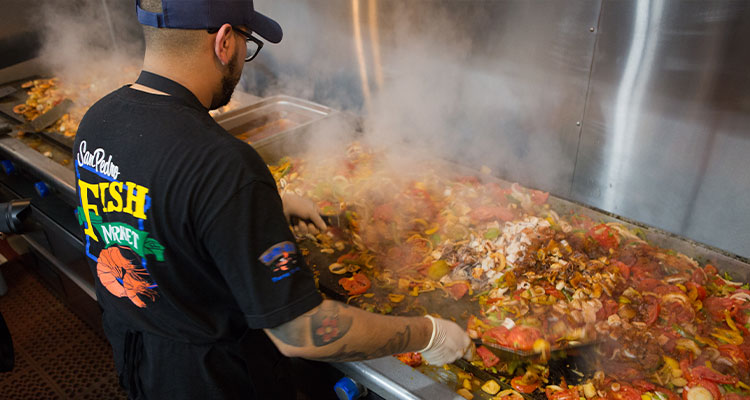
If anyone understands the value of proficient storytelling, its Michael Ungaro, owner of San Pedro Fish Market. The family-owned and operated eatery originated as a 200-square-foot corner store in 1956, where Michael’s grandfather began selling seafood to San Pedro locals. Its popularity grew and the shop moved to a larger location directly on the waterfront, known as Norm’s Landing, before reopening as the San Pedro Fish Market & Restaurant in 1982, serving a variety of pick-your-own seafood with added bell peppers, tomatoes, onions, potatoes and loaves of garlic bread. Not only does the 70-year legacy continue today, but the company has expanded exponentially, with customers travelling from miles around to sample the famous Seafood Trays, and the company even has its own television show on Amazon Prime, Kings of Fish.
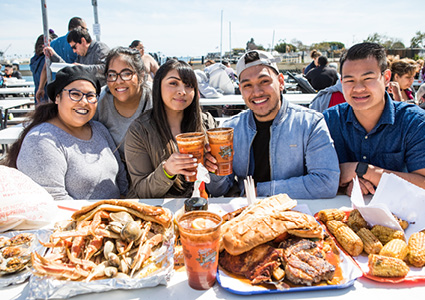
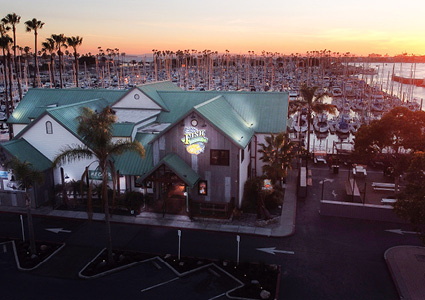
“We went from being a fish market selling fresh seafood to the residents of San Pedro, to opening a restaurant with a full kitchen and a dining room,” begins Michael, as he sits down with Food Chain. However, the restaurant encountered a significant challenge in the form of a natural disaster in its opening year. “1982 was the last time Southern California had a major El Nio and it rained torrentially all summer,” Michael elaborates. “We had 300 seats outside and we almost lost everything. Before we even opened, we were working out of a parking lot for about two years while the area was being redeveloped – and then came the rain! We faced a few hurdles, but we’re resilient. We pivoted, innovated and tried different things, and eventually it worked out, sales increased, and we went from 300 seats to eventually having 3000 seats, serving close to two million customers a year.”
After being displaced for a second time for area redevelopment, it opened a temporary location last year called The Landing on South Harbor Boulevard, San Pedro, which has 1500 seats and can be expanded to 2000. Operating out of container kitchens to create a 2500-square-foot kitchen and fish market area, the business is expected to break $20 million in 2026 – potentially placing it in the Top 10 for US independent restaurants.
Michael explains how his storytelling revelation has driven such remarkable growth. “As I moved into more of a leadership position within the company, I realized we weren’t telling our story. I began studying business narratives and recognized storytelling is a powerful way to distinguish yourself from your competition. Several copycat businesses had started opening nearby our legacy location on the LA waterfront, so I began looking at how we could differentiate ourselves and it dawned on me that we had all these great stories nobody knows about.”
Brand building
Michael’s burgeoning involvement in the company’s marketing and brand building strategy eventually evolved into its TV show – Kings of Fish – beginning with a record-breaking sales day at a lobster festival. “We set three Guinness World Records in a single day and a company approached us, suggesting we make a seafood reality show,” explains Michael. “They marketed it across Hollywood and gave us their ‘sizzle reel’ which is like a long form commercial for the show concept. After watching it, I decided it was some-thing we could make independently. In 2016, we put our own team together and created these four-episode arcs at five minutes long, initially designed for social media. We saw an immediate 25-to-30 percent surge in sales in the first month, which was huge for us – ultimately a seven-figure change!”
Following Kings of Fish’s early success, San Pedro Fish Market teamed up with food media content company, Food Beast, who discovered the restaurant’s ‘Super Trays’ and put them on the map. “Food Beast had over one million followers when we first partnered with them and they offered to film some social media content for us,” says Michael. “One of their team happened to find an obscure menu we had for our programmable kitchens, for weekends and holidays, which mentioned a ‘Super Tray.’ I wasn’t entirely sure what a Super Tray was, but I basically constructed this huge platter of seafood – swordfish, king crab, mussels, shrimp and scallops with garlic bread. Within a few days, Food Beast released the film of their team eating the Super Tray and drinking beers and it went completely viral.”
The Super Tray footage was the catalyst for 30,000 country-wide customers visiting in just ten days. “I was in New York at the time, viewing colleges with my daughter, when the Port of LA Police Department called me to ask what I was doing at the restaurant,” laughs Michael. “I had no idea what they were talking about, and the officer explained they had to close down a freeway off-ramp because they didn’t have enough re-sources to handle the traffic!”
Growth trajectory
Since storytelling with the right partners via social media has had a positive impact on the brand and its sales, the company has continued with this approach. “Our current focus, outside of opening the restaurants, is producing season two of Kings of Fish for Amazon Prime, which is being sponsored by our partners US Foods and True Cordia Insurance. We’re very close to completing season two and we are still looking for more sponsors – as we’re entirely self-produced, they have the advantage of choosing their own storyline.”
Additionally, Michael’s weekly podcast Fish Factor involves interviewing companies who work in collaboration with the restaurant – content which they can repurpose and use to market their brand, strengthening key partnerships between the businesses.
With The Landing location open and thriving, San Pedro Fish Market’s priorities for 2026 are rebuilding the legacy location in San Pedro, releasing Kings of Fish season two and finishing a further location on the historic Fisherman’s Wharf in Monterey. “Our aim is to open a new restaurant every year, preferably water-front, and we’re looking at 10,000 to 15,000-square-foot spaces,” Michael highlights.
“Our three-to-five-year goal is to open the legacy location, preferably for the Olympics, and to finish Monterey within a year and a half. Then we’ll explore other seaside locations, and we have numerous customers in both Las Vegas and Arizona, making them possible inland opportunities.” Further exciting developments include conversations with the city of Anaheim. “As we polled customers travelling from out of town, we realized about 50 percent will visit two places in Southern California – San Pedro Fish Market, and Disneyland. If we could work alongside the Disneyland resort area, it will be great for our brand,” Michael concludes.