KFC and Oreo are taking sweet-and-savoury fast food to a new extreme
Subscribe to our free newsletter today to keep up to date with the latest food industry news.
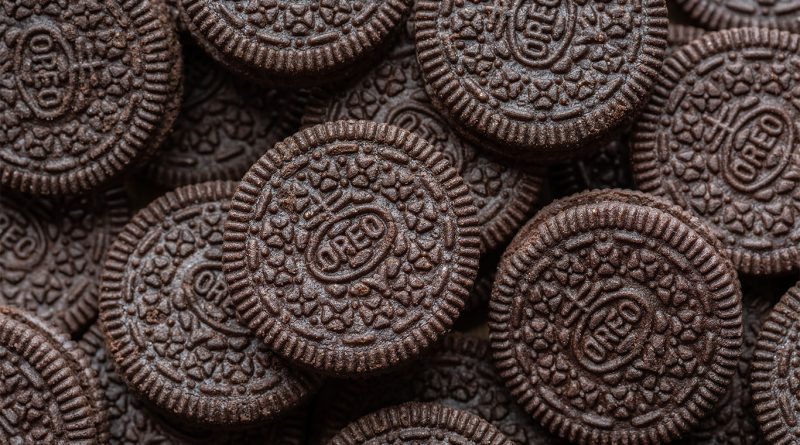
Oreo cookies have been twisted, dunked, crushed into desserts and incorporated into almost every imaginable form of confectionery. KFC China has now found another use for them: turning their flavour into a chicken sandwich.
The fast-food chain is preparing to launch the Oreo Original Recipe Chicken Burger, a limited-edition creation that combines a fried chicken thigh fillet with mashed potatoes, crushed Oreo pieces and two black, Oreo-flavoured buns.
The KFC Oreo chicken burger will arrive at restaurants across China on Aug. 28, according to KFC China’s announcement. The company describes the combination as a collision between sweet and savoury flavours.
At first glance, the sandwich looks like another deliberately strange fast-food creation engineered to generate attention online. But the Oreo burger is actually the second half of a more unusual experiment between the two brands.
Just weeks earlier, they did almost exactly the opposite.
The KFC and Oreo crossover started with a cookie
On July 31, Oreo China introduced a limited-edition KFC-flavoured Oreo cookie.
The product retained Oreo’s familiar chocolate wafers but replaced its traditional sweet creme with a savoury filling designed to evoke KFC’s Original Recipe seasoning. Some of the cookies also carried KFC branding, while the packaging borrowed the fried chicken chain’s familiar red-and-white identity.
Now the partnership has been reversed.
Instead of putting KFC flavour inside an Oreo, the companies are putting Oreo flavour around KFC chicken.
The new burger uses black bread buns designed to resemble Oreo’s dark wafers. Inside is KFC fried chicken and a layer of mashed potatoes covered with crushed cookie pieces. Promotional images even show the sandwich alongside the earlier chicken-flavoured Oreo cookies.
It makes for an unusually complete brand crossover. Neither company is simply putting its logo on somebody else’s product. Each is allowing one of its most recognisable products to be dismantled and reconstructed through the identity of the other.
That is possible because both products are so familiar.
Consumers know what an Oreo is supposed to look and taste like. They also have clear expectations of KFC fried chicken. Swapping elements between them creates something instantly understandable, even when the flavour combination itself sounds improbable.
The idea also fits Oreo’s history of experimenting with unconventional flavours in China. Previous products in the market have reportedly included Hot Chicken Wing, Wasabi, Green Tea and Mushroom Soup varieties.
Against that backdrop, fried chicken creme between chocolate wafers begins to look less like an isolated stunt and more like part of a long-running strategy of making a global product behave differently in local markets.
Why strange fast food makes commercial sense
Limited-edition fast food has a different job from the products that make up a restaurant’s permanent menu.
A core chicken sandwich needs to be reliable. Customers need to understand what they are buying and, ideally, return to buy it repeatedly.
A KFC Oreo chicken burger can operate under different rules.
It only needs to be surprising enough to make consumers curious.
Its visual appearance helps. The black buns immediately separate the sandwich from a conventional chicken burger, while the Oreo crumbs create an ingredient combination that is easy to describe, photograph and debate.
Consumers do not even need to taste the product to participate in the campaign. A photograph is enough to ask the obvious question: Would you eat it?
That ability to generate conversation can make an unconventional menu item valuable beyond direct sales.
The earlier KFC Oreo cookie demonstrated the effect. Its fried chicken-inspired filling prompted strong reactions online, including consumers questioning whether Oreo’s flavour experimentation had gone too far.
For marketers, even that resistance can be useful.
A limited-edition product does not require universal approval. Polarisation can increase attention, particularly when the product is available for only a short period. People who dislike the idea can contribute to its visibility almost as effectively as those lining up to try it.
Two brands, one marketing event
The KFC and Oreo partnership is particularly effective because the brands are trading recognisable assets.
Oreo contributes its black-and-white visual identity, chocolate flavour and ritualistic familiarity. KFC contributes fried chicken, its Original Recipe identity and an established restaurant network.
The result is more than a co-branded box.
First, Oreo transformed KFC’s seasoning into a cookie filling. Now KFC has transformed Oreo into the architecture of a chicken sandwich.
That creates continuity between two limited releases. Consumers who encountered the chicken-flavoured Oreo earlier in the summer can recognise the joke when the collaboration changes direction.
There is also little indication that either company wants these experiments to redefine its core products.
The fried chicken-flavoured Oreo was released as part of Oreo’s limited-edition “Playful Time Travel” collection in China. No international release was announced.
The Oreo Original Recipe Chicken Burger is similarly positioned as a limited-time Chinese menu item. KFC’s announcement confirms the Aug. 28 launch but does not announce an international rollout.
That distinction matters.
A permanent Oreo-flavoured chicken burger would need to earn its place on the menu. A temporary one can simply create a moment.
When the strangest item becomes the advertisement
There is a wider lesson in the way these products are being developed.
Food companies once needed advertising to tell consumers about new products. Increasingly, the product itself can become the advertising.
The more unusual the concept, the easier it is to communicate quickly. “KFC made an Oreo chicken burger” requires almost no further explanation.
The product photographs provide the rest.
Social platforms have made that characteristic particularly valuable. Visually strange food can travel far beyond the physical market where it is sold, exposing international consumers to a campaign they cannot actually participate in.
That helps explain why market exclusivity does not necessarily limit the impact of a launch.
Someone in the United States or Europe may never have the opportunity to order KFC China’s Oreo burger, but they can still encounter the photographs, share them and form an opinion about the collaboration.
The restriction can even make the product more interesting. Scarcity turns an already unusual sandwich into something consumers elsewhere cannot easily obtain.
KFC and Oreo are therefore selling more than an experiment in sweet and savoury flavour. They are playing with two pieces of food culture that consumers already recognise.
An Oreo can taste like KFC and still look enough like an Oreo to make sense. KFC chicken can sit between black Oreo-flavoured buns and still be immediately identifiable as a KFC product.
Few brands have enough recognition to distort their signature products that dramatically without losing their identity.
Whether mashed potatoes, fried chicken and Oreo crumbs actually belong in the same sandwich is a different question.
Commercially, they do not necessarily have to.
KFC needs enough consumers to taste the burger, but it also needs people to photograph it, share it and argue about whether it should exist in the first place.
In that respect, the strangest item on the KFC China menu may also be one of its most effective advertisements.
Sources: