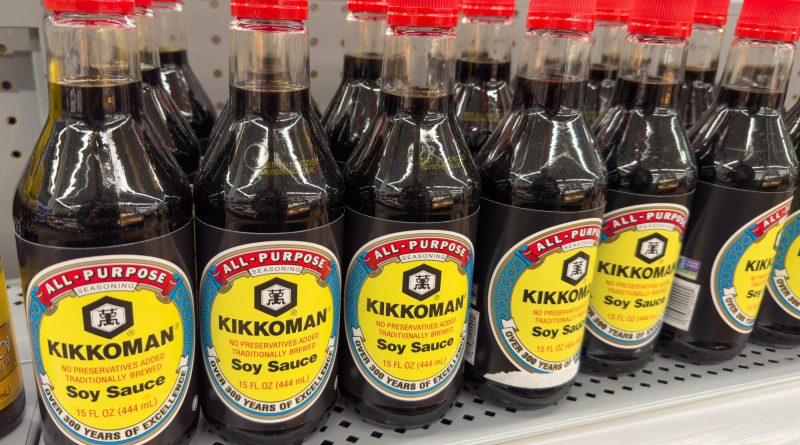
Kikkoman invests $560 million to expand US soy sauce production
Subscribe to our free newsletter today to keep up to date with the latest food industry news.
Kikkoman has opened its third US production plant as the Japanese food manufacturer adds capacity to meet rising North American demand for soy sauce and other Asian seasonings.
The 240,000-square-foot facility in Jefferson, Wisconsin, sits on a 100-acre site and represents a planned investment of about $560 million over 10 years. Soy sauce brewing began in May 2026, while product shipments are scheduled to start in October.
The plant will produce soy sauce and related seasonings for retail, foodservice and food manufacturing customers. It joins Kikkoman’s existing US facilities in Walworth, Wisconsin, and Folsom, California.
The expansion follows years of sales growth. Kikkoman’s North American soy sauce business has grown at an average annual rate of more than 6% over the past decade, according to the company. Kikkoman also says it holds the largest share of the US soy sauce market.
The Jefferson plant shows how changing consumer tastes can shape long-term manufacturing decisions. What began decades ago as an effort to develop a US market for Japanese soy sauce has become a larger domestic production network built around growing American demand.
Asian flavors are taking a larger place in US food
Kikkoman’s expansion comes as international flavors become more common across US restaurants, supermarkets and home kitchens.
Research from Datassential found that 47% of US consumers had eaten a globally influenced dish during the previous week, up from 28% in 2017. It also found that 55% of consumers actively choose global foods over other options when eating away from home.
Younger consumers are helping drive that change. Separate Datassential research found that 58% of Gen Z consumers and 48% of millennials had eaten a globally influenced dish during the previous week. The figure was 19% among baby boomers.
Asian cuisines have benefited from this shift. Ingredients once associated mainly with specialist grocery stores or restaurant categories are appearing across a wider range of meals and packaged foods.
Soy sauce has an advantage because many US consumers already know the product. Manufacturers can use it in prepared meals, marinades, snacks, sauces and other foods without introducing shoppers to an unfamiliar ingredient.
Recent deal activity also points to growing commercial interest in Japanese-inspired sauces. The Marzetti Company completed its $400 million acquisition of Japanese barbecue sauce company Bachan’s in May 2026. Bachan’s reported about $87 million in net sales in 2025.
One acquisition does not define an entire category, but the transaction provides another example of a large food company putting significant capital behind Japanese-style sauces in the US.
For Kikkoman, rising demand is now translating into additional production capacity.
Local production supports supply as demand grows
The Jefferson location reflects both consumer demand and the practical requirements of soy sauce production.
Kikkoman said it selected the area partly because of access to soybeans and wheat, the main agricultural ingredients used in naturally brewed soy sauce. The company also cited access to water, workers and major markets.
The site is about 37 miles north of Kikkoman’s Walworth operation, where the company began US production more than 50 years ago.
That proximity allows Kikkoman to add capacity while remaining within an established regional manufacturing and agricultural network.
It also supports the company’s plan to strengthen supply in North America. Kikkoman describes the region as its largest overseas market, making reliable local production more important as volumes increase.
The strategy has relevance beyond condiments. Food manufacturers have spent recent years examining how far products and ingredients travel before reaching customers. Freight costs, supply disruption and changing demand have increased interest in producing goods closer to major markets.
Domestic production does not remove every supply risk. Manufacturers still depend on equipment, packaging, agricultural inputs and other materials that can come from wider supply networks. Additional local capacity can, however, give companies more control over production volumes and distribution.
The Wisconsin expansion therefore gives Kikkoman more production capacity while strengthening its ability to serve North American customers from within the region.
A US manufacturing strategy more than 50 years in the making
Kikkoman’s latest investment builds on a localization strategy that began long before Asian flavors became a regular part of the US food market.
The company started shipments from its first US plant in Walworth in 1973. It added a second operation in Folsom in 1998. The Jefferson facility is its third US plant and the Kikkoman Group’s ninth soy sauce production site outside Japan.
That history matters because the company’s growth has taken place over decades rather than through a sudden change in consumer behavior.
Kikkoman initially had to develop a market for soy sauce outside traditional Japanese cooking. As international cuisines became more familiar to US consumers, the number of potential uses increased.
The Jefferson investment suggests the company expects that trend to continue.
The plant will also produce more than traditional soy sauce. Kikkoman has said the site will manufacture a range of soy sauce-related seasonings, allowing it to serve different customer needs as tastes change.
For manufacturers, this is one of the wider lessons from the investment. Food trends may first appear on restaurant menus or supermarket shelves, but sustained changes in demand eventually affect factories, sourcing and capital spending.
More than five decades after beginning production in Wisconsin, Kikkoman is committing hundreds of millions of dollars to another facility in the state.
The investment shows how firmly Asian flavors have entered the North American food market and how consumer demand is now shaping decisions about where and how those products are made.
Source