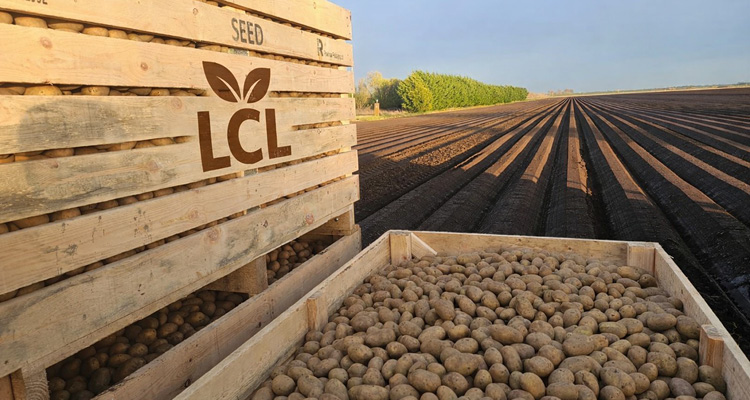
Linwood Crops scales a usage-led potato model through grower partnerships, vertical integration and tight supply discipline
The UK potato sector has seen major shifts in supply and demand, pushing producers and suppliers to rethink how they do business. In this evolving landscape, Linwood Crops (Linwood), led by co-Managing Directors and co-owners, James Ragg and Matt Thory, has created a system that links what’s grown in the field with what’s served on the plate. Based in Cambridgeshire, it brings together agronomy, storage and packing with one guiding principle: providing appropriate potatoes to be used in real kitchens. James Ragg leads daily operations and shares his thoughts as Linwood gets ready to celebrate its tenth anniversary.
Founded in 2016, Linwood started with a group of industry specialists who noticed a gap between how potatoes were grown and how they were used. After working at QV Foods, James and his co-founders knew the supply chain at every level, and knew what customers really needed.
Right from the start, Linwood moved away from the industry’s usual variety-led sales model. Instead, the team built its offer around cooking function, making procurement easier for kitchens and distributors. “We sell by cooking category, like mashing, boiling, chipping, roasting and baking potatoes. We supply kitchens with the right potatoes for their needs instead of focusing on variety,” James says. The approach shapes every step, from seed selection to final delivery.
Agronomy guidance
Most potato suppliers still sell by named varieties. Linwood manages varieties behind the scenes, so customers benefit from a simple and efficient, usage-based structure. The team tracks seasonal shifts with an internal calendar, matching the best-performing variety to this model throughout the year. “We choose varieties that fit the purpose, and those choices shift as the season progresses,” James continues. To deliver a consistent supply, Linwood sources potatoes from across the UK and Northern Europe, adjusting its approach as growing conditions change. “We grow in every corner of the country. That means we can start with early crops and continue through the season,” he notes.
Linwood partners with a network of 150-to-180 growers, supporting them with seed, agronomic advice and planning. The hands-on approach aligns with this model, where the output must match the function, not just yield. “We’re fully integrated, offering agronomy guidance and supplying our growers with all their seed,” James shares. Changing weather patterns have made things more complex. Now, Linwood focuses on resilience and steady yields when choosing varieties and using land. “We’re always adapting to environmental changes, so we choose varieties that can handle those conditions,” James says.
Integrated growth
Recently, Linwood has taken more control of its supply chain. The company now runs its own growing operation, covering 250 acres and producing about 5000 tons each season. “We needed to understand the risk and cost of growing ourselves,” James recalls. Growing its own crops gives Linwood firsthand insight into production challenges and builds stronger relationships with both growers and customers. “It proves we’re fully committed to the industry.” Beyond production, Linwood also operates packing and storage facilities that help manage supply year-round. The ability to hold stock and release it as needed keeps the supply stable even when growing conditions shift.

On the commercial side, Linwood has built a diverse customer base across foodservice, wholesale and manufacturing. Unlike its competitors, Linwood supplies every sector of the industry. It serves up to 150 customers daily, balancing large contracts with smaller orders. “No single customer accounts for more than 20 percent of our volume, and that gives us strength,” James explains. This diversity helps Linwood match all of the different grades and specifications to the appropriate outlets. “It’s about understanding who can use what, and pairing qualities with uses,” he adds.
Private-label partnerships are part of the business. Linwood collaborates with customers to supply branded ranges. “We’ve introduced a range with Fresh Direct called Chef’s Choice, which features bakers, salads, and roasting lines,” James says.
Aligning supply and demand
Linwood has grown from 12 people at launch to more than 40 today. Many of its employees have been working in the industry since leaving school and have spent the last decade with Linwood. That dedication and longevity has built real continuity across the business. That same continuity, James asserts, shapes how Linwood approaches its long-term relationships with growers and customers. “We look after our staff well, and they care deeply about what we’re building,” he adds.
That same focus extends to growers and customers, where long-term engagement guides decision-making. “We need to partner with growers for the long term. It’s not about making short-term decisions,” he highlights.
James’ role shows that philosophy in action. He stays close to the daily operational management while Matt sets direction for long-term growth, investment, and market positioning. Their collaboration and close involvement helps Linwood respond quickly to sector changes. “I think it comes down to attention to detail and commitment to the supply chain,” James observes.
The market is shifting again. “The industry has had a tough year; we’re oversupplied,” James says. Strong yields and softer consumer demand across parts of Europe have created a surplus. “We only grow on land with irrigation, and that’s helped us keep yields steady,” he continues. “We’ve kept our volumes steady, and everything we’ve grown has a home.” Linwood has managed its position by closely aligning production with its customer base.
Looking ahead, capacity will shape the next phase of growth. The current site is nearing its limits, so expansion is under review. “We’re planning a significant investment in the site to increase capacity,” James shares. “We want to keep building the business, reach new customers, and welcome more growers.”
Alongside these priorities, James keeps coming back to the product itself, connecting supply decisions with what reaches the plate. “Potatoes are probably undervalued. You can feed a family of four for under ten pounds,” he concludes. Linwood understands that the fresh potato remains a key staple on the British plate and is essential in helping families beat the cost-of-living crisis.