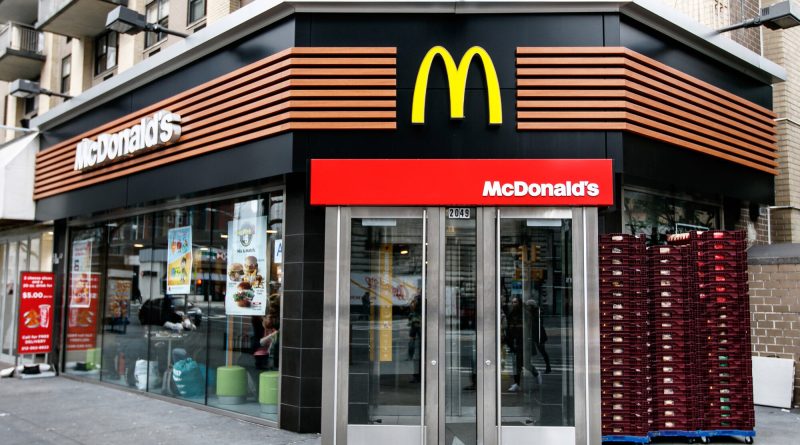
McDonald’s bets $8.5 billion on more productive restaurants
Subscribe to our free newsletter today to keep up to date with the latest food industry news.
McDonald’s is preparing to spend billions of dollars helping franchisees redesign restaurants, install new technology and change how employees work.
Under its NEXT strategy, the company plans to provide about $8.5 billion in support to franchisees through 2036. Around $5 billion is expected to be provided through 2030.
The support will include rent relief and capital contributions. But the more important question is what the investment will deliver at restaurant level.
McDonald’s estimates that its Restaurant > NEXT program could improve gross restaurant-level efficiency by about 250 basis points. For the average US restaurant, management says that could equal roughly $100,000 in annual cash-flow benefits.
The company also estimates that franchisees could achieve a roughly four-year payback after McDonald’s financial support.
That gives investors and restaurant operators a clear measure to watch.
The initial market reaction was cautious. McDonald’s shares fell after the announcement as investors weighed the cost and length of the program against slower growth in the US restaurant market.
The strategy asks investors and franchisees to take a longer-term view. McDonald’s believes restaurant design, new equipment and technology can reduce operating costs while improving service.
The size of the investment will draw attention. The more important test will be whether those changes improve restaurant economics.
McDonald’s is redesigning the restaurant as an operating system
The NEXT program goes beyond a standard restaurant refurbishment.
McDonald’s plans to combine changes to restaurant design, kitchen equipment, operating processes and technology. That includes ArchIQ, its GenAI-enabled restaurant technology platform.
For a traditional US drive-thru restaurant, management estimates that deploying all Restaurant > NEXT elements could require around $800,000 in added investment.
Comparable investment in major international operated markets is expected to be around $650,000 to $700,000 per restaurant.
Those costs help explain why McDonald’s plans to support franchisees and introduce changes in stages.
The strategy also reflects a broader issue facing restaurant operators.
Digital ordering, kitchen systems, loyalty programs and automation are often introduced as separate projects. In practice, their value depends on how well they work together.
A digital order still has to move through a physical kitchen. Faster ordering has limited value if food preparation becomes a bottleneck. New kitchen equipment may improve output, but those gains can be reduced if employees have to follow slow or complicated processes.
McDonald’s is trying to address those links within one restaurant program.
That also changes how the company’s use of AI should be judged.
The number of new systems installed is easy to measure. The harder question is whether those systems reduce costs, improve order flow or support higher sales.
For restaurant operators considering similar investments, those outcomes matter more than adoption rates.
Technology has to improve the economics of the restaurant where it is installed.
The economics will determine whether NEXT works
Franchise economics sit at the center of the strategy.
Most McDonald’s restaurants are operated by franchisees. Those operators will have to introduce many of the changes while continuing to manage labor costs, food inflation and changes in customer demand.
The estimated $100,000 annual cash-flow benefit is therefore significant.
If McDonald’s reaches its efficiency targets, franchisees could have more room to absorb higher costs or reinvest in their businesses.
The program could also offer wider evidence on whether restaurant automation and new technology can produce measurable financial returns.
But the required investment is substantial.
An added investment of around $800,000 at a traditional US drive-thru restaurant creates a high hurdle for any modernization plan.
McDonald’s financial support reduces the burden on franchisees, but the operating gains still need to appear.
The phased rollout may help reduce that risk. It gives the company time to assess different parts of the program before every restaurant receives the full package.
McDonald’s size could also help.
A restaurant system with tens of thousands of locations can produce large amounts of operating data. The company can study which technologies, layouts and processes are improving performance and which are not.
The harder task will be turning those findings into consistent results across restaurants with different layouts, sales volumes and customer patterns.
Better restaurants still need more customers
Productivity is only one part of the financial case.
McDonald’s reported global comparable sales growth of 1.3% in the second quarter of 2026. Comparable sales in the US increased 0.8%.
That puts customer demand near the center of the NEXT strategy.
A faster kitchen can lower costs and improve service. It cannot guarantee higher traffic.
McDonald’s is pursuing several other growth plans. The company wants to gain 1.5 percentage points of market share in both chicken and beverages by 2030 while maintaining its position in beef.
Its loyalty program also gives the company a large digital customer base.
McDonald’s reported nearly 220 million 90-day active loyalty users across 70 loyalty markets at the end of the second quarter. Sales to loyalty members exceeded $40 billion during the previous 12 months.
Connecting those digital relationships with restaurant operations may become one of the most important parts of NEXT.
Promotions and loyalty offers can increase orders. Restaurants still need to serve those customers quickly and accurately.
Operational improvements can support demand by making additional transactions easier for restaurants to handle.
That link also makes the McDonald’s overhaul relevant outside fast food.
Companies across retail and hospitality are investing in AI, automation and digital customer tools while managing costly physical locations.
The financial case for those systems depends on what happens inside those locations.
McDonald’s has attached specific financial targets to that process.
Its $8.5 billion commitment will attract attention because of its size. The more useful figure may be $100,000.
That is the annual cash-flow benefit McDonald’s believes an average US restaurant could eventually receive.
Reaching that target across a large franchise network would provide a clearer measure of the value of restaurant technology than the number of AI systems installed or locations redesigned.
For McDonald’s, NEXT will be judged by whether technology and restaurant investment can produce measurable gains in productivity while giving customers enough reason to return.
Source