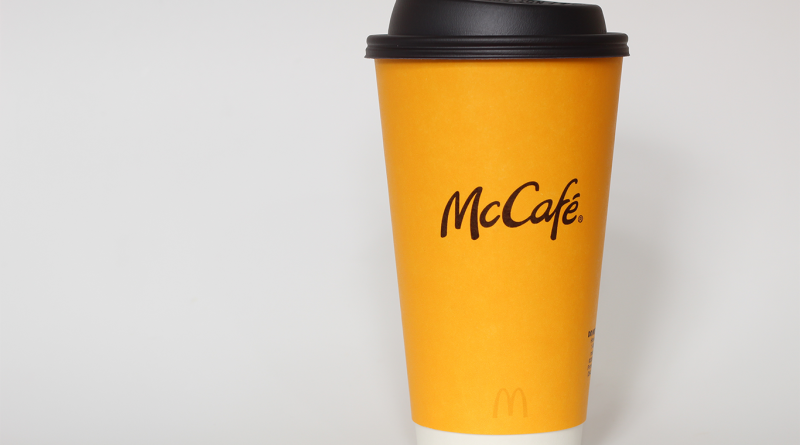
McDonald’s expands its beverage push with caramel apple pie coffee
Pumpkin spice has spent years as the unofficial flavor of fall. McDonald’s is betting that consumers might be ready for something different.
The fast-food chain has launched a limited-time Caramel Apple Pie coffee flavor, translating one of America’s most familiar autumn desserts into a range of caffeinated drinks. Available from Aug. 18, the flavor can be ordered as an iced coffee, hot latte, iced latte or blended Frappe.
It is a seasonal launch built around familiarity rather than reinvention. Apple, caramel and coffee provide the foundation, while whipped cream, salted caramel sauce and apple pie crumbles push the drinks closer to dessert territory.
More significantly, the launch arrives as McDonald’s puts greater emphasis on beverages and as the wider coffee market experiments with a broader definition of what fall tastes like. Pumpkin spice remains a formidable seasonal seller, but apple, caramel, maple and other flavors are giving consumers more ways to mark the change of season.
For McDonald’s, that creates an opportunity to participate in the fall coffee rush without simply producing another pumpkin spice latte.
McDonald’s turns apple pie into a drink
The Caramel Apple Pie range takes a straightforward approach. McDonald’s combines apple and caramel flavoring with its coffee, then adds whipped cream, salted caramel sauce and apple pie crumbles.
Customers can choose a Caramel Apple Pie Iced Coffee or an espresso-based hot or iced latte. The Caramel Apple Pie Frappe blends coffee with ice for a colder, sweeter version that may have particular appeal while late-summer temperatures remain high.
That flexibility matters. Seasonal drinks increasingly arrive before the weather associated with them. An iced or blended version allows McDonald’s to sell an autumn flavor even when much of the country is still experiencing summer heat.
The bigger advantage, however, may be familiarity.
McDonald’s has sold apple pies in the U.S. since the late 1960s. The company moved from its original fried pie to an oven-baked version in 1992 and has subsequently experimented with other seasonal fillings, including pumpkin, holiday custard and strawberries and cream.
Turning apple pie into coffee therefore gives McDonald’s a seasonal product with an immediate connection to its existing menu. Customers do not need much explanation about what a caramel apple pie drink is supposed to taste like.
It also allows McDonald’s to play in a part of the market traditionally associated with specialist coffee chains. A flavored latte topped with sauce and crumbles has more in common with the elaborate seasonal drinks sold by coffee shops than with the conventional cup of drive-thru coffee.
McDonald’s, however, can put that proposition alongside breakfast sandwiches, fries and burgers, potentially making a specialty-style beverage an add-on to visits customers are already making.
Fall coffee is moving beyond pumpkin spice
Pumpkin spice is not disappearing.
Starbucks, the company most closely associated with the modern pumpkin spice phenomenon, began bringing its pumpkin-flavored packaged coffees, creamers and ready-to-drink products back to U.S. grocery shelves in August. The annual return demonstrates the enduring commercial power of the flavor.
But pumpkin no longer has the autumn market entirely to itself.
Food and beverage companies have increasingly used caramel, apple, maple and pecan to signal fall. The appeal is straightforward. These flavors carry many of the same associations with cooler weather and seasonal desserts while giving consumers an alternative to a flavor profile that has become ubiquitous.
Caramel apple is particularly useful because it combines two highly recognizable tastes. Apple provides the seasonal association, while caramel supplies the sweetness and indulgence expected from a specialty coffee.
McDonald’s is also attaching the flavor to a product consumers already associate with the brand. That distinguishes the launch from a generic caramel apple latte that could appear on almost any coffee menu.
The approach reflects a broader reality of limited-time fast-food launches. Novelty can attract attention, but too much novelty creates a risk. Products still need to be instantly understandable.
“Apple pie, but in a coffee” requires little interpretation.
Seasonal menus also give restaurant chains a reason to create urgency. Unlike a permanent menu addition, a limited-time drink encourages customers to visit while it is available. Social media attention and curiosity can amplify that effect, particularly when the product offers a recognizable alternative to the season’s dominant flavor.
For McDonald’s, the result is a drink that feels new without asking customers to venture particularly far outside familiar territory.
The bigger beverage bet at McDonald’s
The launch is also notable because it follows a series of moves by McDonald’s to expand the role of drinks on its menu.
Earlier in August, the company teamed with Red Bull on energy refreshers and expanded its selection of crafted sodas. Those products sit alongside McCafé coffee and other caffeinated and non-caffeinated options, widening the number of occasions in which consumers might visit McDonald’s primarily for a beverage.
The strategy has roots in CosMc’s, McDonald’s beverage-focused restaurant experiment. The concept offered a larger selection of specialty drinks closer to those found in coffee shops and soda chains. McDonald’s closed the five CosMc’s pilot locations in 2025, but elements of the experiment appear to have survived in the company’s broader menu strategy.
That distinction is important. Closing a standalone concept does not necessarily mean abandoning what was learned from it.
Beverages can offer restaurant chains another route to customers outside traditional meal occasions. Morning coffee, an afternoon caffeine run or a cold drink on the way home does not require a full meal. A sufficiently distinctive beverage can become the reason for the visit rather than an accompaniment to food.
McDonald’s already has the scale to compete for those occasions. The challenge is giving consumers a reason to choose its drive-thru when dedicated coffee chains, convenience stores and increasingly sophisticated beverage concepts are competing for the same purchase.
Caramel Apple Pie coffee offers one answer. It combines an established McDonald’s product association with the mechanics of the modern specialty beverage: customization, indulgent toppings, multiple formats and limited-time availability.
It also avoids competing directly with every pumpkin spice drink arriving for fall.
That may prove to be the most interesting part of the launch. McDonald’s does not need to replace pumpkin spice to benefit from seasonal coffee demand. It only needs to offer consumers another recognizable taste of fall.
This year, it is betting that apple pie can do the job.