McDonald’s FIFA World Cup meals offer a lesson in customer retention
Subscribe to our free newsletter today to keep up to date with the latest food industry news.
McDonald’s latest FIFA World Cup 2026 promotion may appear to be another limited-time menu launch, but the campaign reflects a broader shift taking place across the restaurant industry.
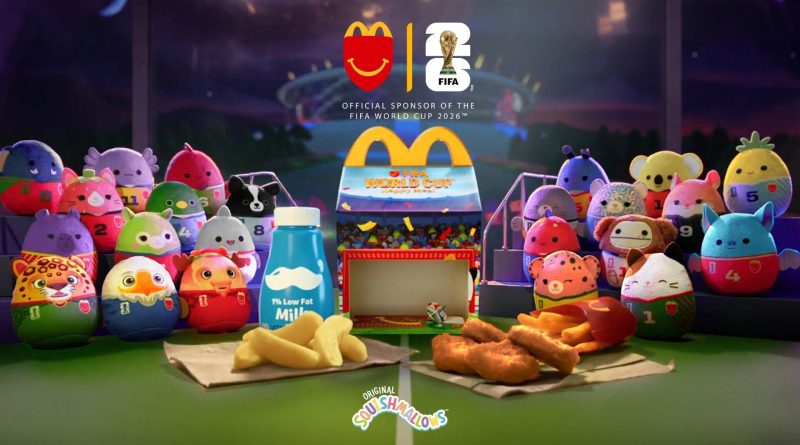
The promotion combines World Cup-themed meals, collectible cups featuring soccer stars and Happy Meal Squishmallows tied to the tournament. While the initiative is designed to capitalize on one of the world’s largest sporting events, it also highlights how restaurant brands are rethinking customer acquisition and retention.
As competition intensifies across the quick-service restaurant sector, operators are increasingly relying on collectibles, entertainment partnerships and cultural events to attract customers. The objective is no longer simply to sell food. It is to create experiences that encourage repeat visits and build stronger connections with consumers.
McDonald’s World Cup campaign offers a timely example of how major chains are adapting as consumers become more selective about where they spend their money.
Restaurant brands are looking beyond menu innovation
Traffic remains one of the industry’s most closely watched metrics.
While inflation has pushed menu prices higher across much of the sector, many operators continue to face challenges maintaining visit frequency. Consumers remain cautious with discretionary spending, forcing restaurant brands to compete aggressively for every dining occasion.
Historically, chains relied on menu innovation to generate demand. New burgers, chicken sandwiches and seasonal beverages often delivered short-term sales lifts. Those tactics still matter, but food alone does not always generate enough attention to break through a crowded marketplace.
Consumers are exposed to a constant stream of marketing messages across digital platforms, while social media rewards novelty, exclusivity and shareable experiences.
As a result, restaurant operators are expanding their marketing strategies.
McDonald’s has experimented with celebrity meals, branded merchandise and entertainment partnerships in recent years. Other major chains have pursued similar approaches, borrowing ideas from retail, gaming and popular culture to stay relevant with consumers.
The World Cup promotion represents the latest stage of that evolution.
By connecting meals to collectibles and a globally recognized sporting event, McDonald’s creates multiple entry points into the brand. Soccer fans may be attracted by the tournament connection. Families may be interested in the Squishmallows. Collectors may return several times in search of specific items.
Each audience arrives for a different reason, broadening the campaign’s potential reach.
Collectibles have become a powerful traffic driver
The restaurant industry has long understood the value of promotional merchandise.
Happy Meal toys helped establish McDonald’s as a destination for families and collectors decades ago. Today’s campaigns build on that foundation while benefiting from digital platforms that can rapidly amplify consumer interest.
The business case is straightforward.
Collectible items can encourage repeat purchases without requiring significant menu changes or operational complexity. Customers often make multiple visits during a promotion, increasing transaction frequency throughout the campaign period.
Social media extends the impact. Consumers regularly post photos and videos of collectible items, generating exposure that reaches audiences beyond traditional advertising channels.
Scarcity remains central to the strategy. Limited-edition products create urgency because customers know the opportunity is temporary.
For restaurant marketers, collectibles serve two functions. They attract attention and encourage repeat visits.
McDonald’s World Cup campaign combines both. Customers receive a random collectible cup, introducing an element of chance that may encourage additional purchases. The Happy Meal collectibles operate on a similar principle.
What appears to be a simple giveaway is, in reality, a carefully structured effort to increase customer engagement and visit frequency.
Sports sponsorships continue to deliver unique value
The FIFA World Cup remains one of the most valuable sponsorship properties in global marketing.
The tournament attracts billions of viewers and generates discussion months before the opening match. For restaurant brands with international footprints, few events offer comparable scale.
McDonald’s has maintained a long-standing relationship with FIFA, making the partnership a natural extension of its broader marketing strategy.
The value extends beyond visibility.
Sports create emotional investment in ways that few forms of entertainment can match. Fans develop strong attachments to teams, players and tournament storylines. Brands that successfully align themselves with those moments gain access to highly engaged audiences.
For restaurant operators, that can translate into increased traffic, stronger brand awareness and improved customer loyalty.
The inclusion of soccer stars on collectible merchandise demonstrates how sponsorship rights can be transformed into tangible consumer experiences. Rather than limiting the partnership to advertising campaigns, McDonald’s has integrated the tournament directly into the customer experience.
This approach creates a clearer connection between sponsorship spending and commercial outcomes.
Restaurant marketing is becoming more experiential
The World Cup promotion highlights a trend that continues to reshape restaurant marketing.
Successful campaigns increasingly combine food, merchandise, entertainment and digital engagement into a unified customer experience. The menu remains central, but it is now supported by a broader ecosystem of touchpoints designed to keep consumers engaged.
Customers are drawn to brands that align with their interests and passions. Restaurant operators that can establish those connections are more likely to stand out in a competitive market.
None of this diminishes the importance of food quality, value or operational execution. Those fundamentals remain essential. What is changing is the way brands capture attention and maintain relevance between visits.
Marketing campaigns are becoming more immersive, more participatory and more closely tied to cultural moments.
McDonald’s FIFA World Cup promotion offers a useful indication of where the industry is heading. The campaign is not simply designed to sell burgers and Happy Meals. It is designed to create reasons for customers to return.
For restaurant operators monitoring traffic trends and changing consumer behavior, that distinction may become increasingly important in the years ahead.
Source