How Mondelēz became the world’s biggest candy company
Subscribe to our free newsletter today to keep up to date with the latest food industry news.
Consumers asked to name the world’s largest candy company might reach first for Mars, Hershey or Ferrero. The 2026 Global Top 100 Candy Companies ranking points somewhere else.
Mondelēz International sits at No. 1 with reported confectionery sales of $38.5 billion, ahead of Mars and well above Hershey. The ranking reflects the scale of a company whose corporate identity remains less familiar than many of the products it owns.
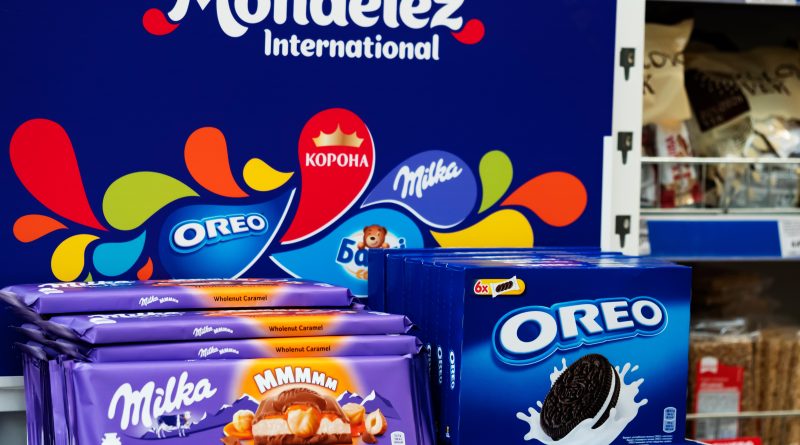
That distinction matters. Mondelēz is not simply a chocolate manufacturer. Its portfolio spans chocolate, biscuits, baked snacks, candy and snack bars, with brands including Cadbury Dairy Milk, Milka, Toblerone, Oreo, Ritz, LU and Clif Bar. The company sells products in more than 150 countries.
Its $38.5 billion figure needs some context too. Mondelēz reported total net revenue of approximately $38.5 billion for 2025. The industry ranking uses the same amount for confectionery sales, even though the company’s revenue includes products outside conventional candy. Calling all $38.5 billion “candy sales” would overstate what the company’s financial statements disclose.
What the number does demonstrate is the commercial reach behind a collection of brands that operate across categories, markets and price points.
Mondelēz built its scale from brands consumers know better than its name
Mondelēz emerged in its current form in 2012 when Kraft Foods separated its North American grocery business from its global snacks operation. The split created a company centered on brands with international distribution and strong positions in chocolate and biscuits.
That structure helps explain why Mondelēz can seem almost invisible compared with the products it controls.
Cadbury Dairy Milk has a consumer identity independent of its corporate owner. So do Milka and Toblerone. Oreo carries similar weight in biscuits. Ritz occupies another part of the snacking market. For shoppers, those are distinct brands. For Mondelēz, they form a portfolio that spreads revenue across products, regions and purchasing occasions.
Scale is useful in packaged food because manufacturing is only one part of the economics. Large companies can negotiate retail distribution across markets, support brands with sizable marketing budgets and spread investments in procurement, logistics, technology and product development across a broad revenue base.
Mondelēz’s presence in more than 150 countries gives it another advantage. Weakness in one market does not necessarily translate into weakness everywhere. The company’s brands can compete through different price tiers and formats depending on local conditions.
That geographic reach has become particularly relevant as chocolate companies confront higher input costs and uneven consumer demand.
Scale matters more when cocoa costs put chocolate margins under pressure
The title of world’s biggest candy company does not make Mondelēz immune to the economics of cocoa.
During 2025, the company described cocoa costs as an unprecedented headwind. Full-year net revenue increased 5.8% and organic net revenue rose 4.3%, yet volume and mix declined 3.7%. Adjusted earnings per share fell 14.6% on a constant-currency basis.
Those figures reveal the tension facing large chocolate manufacturers. When cocoa and other raw materials become more expensive, companies can raise prices to recover part of the increase. Price increases can support revenue, but they can discourage purchases or push consumers toward smaller packages, lower-priced alternatives or fewer discretionary treats.
For Mondelēz, that tension showed up clearly in 2025. Higher pricing supported organic revenue growth even as volume weakened. Adjusted gross profit margin declined as higher raw-material costs outweighed some of the benefits from pricing and lower manufacturing costs.
Portfolio breadth can soften that pressure. A company selling biscuits, baked snacks and other products alongside chocolate is less dependent on one ingredient or one category. That does not eliminate commodity exposure, but it changes the risk profile compared with a business concentrated entirely in chocolate.
The company’s sourcing strategy is another part of that equation. Mondelēz has expanded its Cocoa Life program across its chocolate supply chain, linking cocoa sourcing with farm productivity, community programs and longer-term supply considerations.
Those efforts sit alongside a harder commercial reality. Consumers may like chocolate, but they still respond to price.
The next test is turning pricing power back into volume growth
Mondelēz entered 2026 needing to show that revenue growth could come from more than price increases.
Its second-quarter results provided an early sign of improvement. Net revenue rose 4.1%, organic net revenue increased 2.2% and volume and mix grew 0.7%. The company raised its full-year organic revenue growth expectation to at least 2%.
The regional picture remained uneven. Europe was weaker, with organic revenue declining 3.5% during the quarter. Mondelēz attributed much of that result to lower chocolate volumes during unusually hot weather. Performance was stronger across several other regions.
The return of positive volume matters because packaged-food companies cannot rely indefinitely on raising prices. Sustainable growth needs consumers to keep buying products, whether through existing brands, new formats or expansion into new markets and occasions.
Mondelēz’s position at the top of the candy ranking shows what decades of brand ownership, distribution and international expansion can produce. Its less visible corporate name may even make the result more surprising. Consumers rarely buy “Mondelēz” from a store shelf. They buy Cadbury, Milka, Toblerone, Oreo and dozens of other brands.
That separation between corporate identity and consumer recognition is central to the company’s scale.
The more difficult question now is whether that scale can continue producing volume growth when chocolate remains expensive, consumer budgets stay sensitive and global competitors are chasing many of the same purchases.
Being No. 1 measures what Mondelēz has already built. Holding the position will depend on how well that portfolio performs when pricing alone is no longer enough.
Source