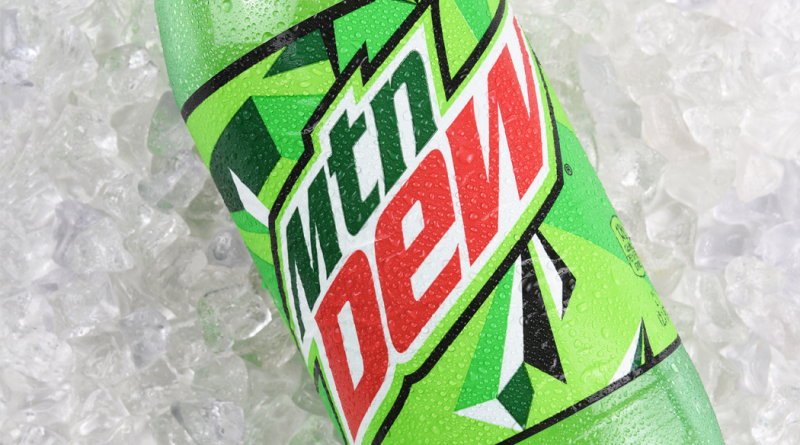
PepsiCo targets Gen Z with Mountain Dew dirty soda strategy
Subscribe to our free newsletter today to keep up to date with the latest food industry news.
Mountain Dew is stepping into one of the fastest-moving beverage trends in the US, turning a once regional habit into a packaged product. Dirty soda, a mix of carbonated soft drinks with cream, flavored syrups and fruit elements, has moved from Utah-based specialty chains into mainstream awareness through social media.
The brand’s latest move reflects how quickly consumer behavior can reshape product pipelines. What began as a customizable, in-store experience has become a scalable concept for multinational beverage companies. TikTok has played a central role in accelerating that shift, turning visually distinctive drinks into repeatable demand signals.
Mountain Dew’s entry into the category marks a shift from observing trends to formalizing them. Instead of relying on organic consumer experimentation, PepsiCo is translating the concept into a ready-to-drink format that can be distributed at scale. That move positions the company to reach consumers who may not have access to specialty soda chains but are familiar with the concept online.
The timing is notable. Carbonated soft drinks remain a mature category in the US, where volume growth is limited and competition is intense. Innovation is less about entirely new categories and more about recombining existing ones. Dirty soda fits that pattern, blending soda with elements more commonly found in coffee or dessert beverages.
How PepsiCo is reshaping Mountain Dew’s identity through experimentation and youth appeal
Mountain Dew has long been one of PepsiCo’s most flexible brands. While its core citrus flavor remains central, the brand has spent years expanding into adjacent spaces through limited releases, seasonal variants and collaborations. Products like Baja Blast have demonstrated how a single flavor extension can build a strong identity outside traditional retail channels.
The move into dirty soda builds on that history. It reflects a broader strategy of keeping the brand relevant among younger consumers who value novelty and customization. Gen Z, in particular, has shown a willingness to experiment with flavor combinations and hybrid drinks, often influenced by digital platforms rather than traditional advertising.
PepsiCo’s approach has increasingly focused on speed. Shorter development cycles allow the company to respond to trends while they are still gaining traction. That agility is critical in a market where viral moments can shape demand within weeks rather than years.
At the same time, the company is balancing experimentation with brand consistency. Mountain Dew’s identity as a bold, high-energy beverage remains intact, even as the format evolves. The dirty soda concept does not replace the original product but extends its use cases, shifting it from a standalone drink to a base for layered flavor experiences.
The business case behind dirty soda and the rise of beverage customization
The growth of dirty soda is tied closely to the success of regional chains that prioritize customization. Brands such as Swig and Sodalicious have built strong followings by allowing customers to mix and match flavors, creating a sense of ownership over the final product. That model has proven effective in driving repeat visits and higher average order values.
Customization is becoming a defining feature of modern food and beverage consumption. Consumers are no longer limited to fixed menus and increasingly expect options that reflect personal taste. Dirty soda aligns with that expectation, offering a framework rather than a single flavor profile.
Social media has amplified this behavior. Drinks that look distinctive or unusual are more likely to be shared, turning individual purchases into marketing moments. This dynamic has reduced the barrier between niche and mainstream, allowing trends to scale faster than in previous decades.
For large manufacturers, the challenge is translating that flexibility into a packaged format. While a ready-to-drink product cannot replicate full customization, it can capture the essence of the trend. By selecting popular flavor combinations and standardizing them, companies can offer a simplified version that appeals to a broader audience.
What Mountain Dew’s move signals for the future of soda innovation
Mountain Dew’s entry into dirty soda reflects a wider shift in how beverage innovation is approached. The boundaries between retail products, quick-service restaurants and specialty drink shops are becoming less distinct. Concepts that originate in one channel are increasingly adapted for others.
This convergence is changing the role of major brands. Instead of leading innovation from within, they are acting as amplifiers of consumer-driven trends. That approach reduces risk but also requires careful timing. Enter too early, and the concept may not resonate. Enter too late, and the market may already be saturated.
There are also operational considerations. Hybrid beverages that combine soda with dairy or other ingredients introduce complexity in formulation, shelf life and distribution. Scaling these products requires balancing novelty with practicality.
The potential upside remains significant. By tapping into trends with proven demand, companies can extend the life cycle of mature categories. Dirty soda offers a way to reposition carbonated soft drinks as part of a broader experience rather than a standalone product.
Mountain Dew’s latest launch reflects a shift toward modular, experience-driven consumption, where the value lies not just in the drink itself but in how it connects to evolving consumer habits.
Sources