Pooch & Mutt is responding to demand for science-backed pet nutrition with growth across wellbeing
Dog owners have spent years embracing ideas borrowed from human wellbeing. Digestive support, functional ingredients, preventative care, and personalized nutrition are now part of everyday conversations. Paul Dennison sees cat owners starting to ask the same questions and look for similar solutions. “Today’s cat owners are more informed, more health-conscious, and more proactive. They want preventative care and products that help their cats stay healthy and thrive for longer.”
Historically, the cat category lagged behind as innovation focused mostly on dog nutrition, where functional benefits were easier for owners to understand. But that gap is closing fast. Today, cat owners expect the same science-backed, transparent approach they see in dog food, and they’re eager to choose brands that can deliver.
The shift has become a defining priority for Paul since taking the role of Chief Executive Officer at Pooch & Mutt in 2025. Having joined the business as Commercial Director in 2019 before progressing to Managing Director, he has helped steer the company through a period of expansion that has taken it well past its origins in dog nutrition.
Founded in 2007, Pooch & Mutt began with a focus on health and supplements before expanding into treats, complete foods, and wellbeing products. Today, the business operates across direct-to-consumer channels, Amazon, supermarkets, and pet retailers as part of the VAFO Group.
Growth has broadened the product range, but it hasn’t changed the company’s core thinking. Paul puts it this way: “Pooch & Mutt started with a simple belief: pet owners deserve brands that truly put health first. Over the years, we’ve built one of Europe’s most trusted wellbeing focused pet nutrition businesses, supported by experts in nutrition, veterinary science, and microbiology. That foundation let us expand from functional treats into complete wet and dry foods, supplements, and now a multi-category wellbeing brand.” The company’s philosophy, ‘For All Breeds & Needs,’ reflects the fact that no two pets are the same. “Everything we do is designed to help owners make informed, honest choices that support their pets’ long-term health.”
The phrase ‘For All Breeds & Needs’ is more than a tagline; it shapes how the company views pets and their owners. Rather than building products around one feeding philosophy, Pooch & Mutt increasingly focuses on individual needs, whether for digestion, skin and coat health, cognitive development, mobility, or general wellbeing.
Purr-remium portfolio
As owners become more involved in their pets’ health, the conversation moves past what’s in the bowl. “We also invest heavily in education, giving owners transparent, practical advice instead of preaching one ‘right’ way to feed. That trusted-partner approach is central to our brand.” As the pet nutrition sector grows more complex, guidance is more important than ever. Consumers now face a wide range of choices, claims, and feeding approaches. For Paul, the challenge is not just developing products, but helping owners see how nutrition fits into the bigger picture of pet health.
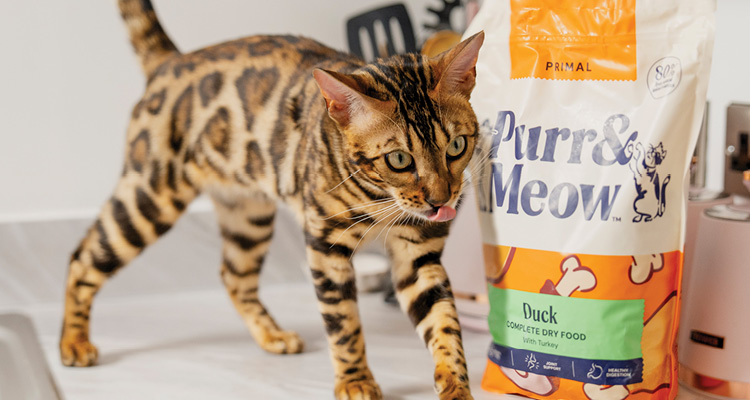
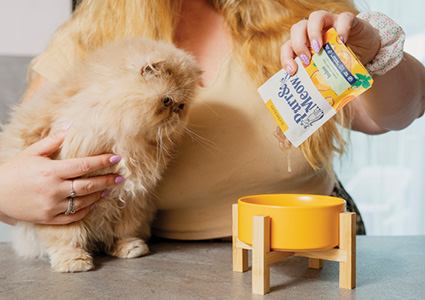
Nowhere is this shift clearer than in the cat category. That mindset inspired one of the company’s biggest recent projects: the relaunch of Purr & Meow. Introduced as the feline counterpart to Pooch & Mutt, the brand has gone through a redesign with new recipes, new packaging, expanded life-stage nutrition, and a revised product structure. The project is the company’s answer to rising demand among cat owners, but it highlights a key difference. As Paul notes: “We’ve mirrored the successful Pooch & Mutt formula in three ways: expert-backed nutrition, functional ingredients with clear health benefits, and a brand built on trust, transparency, and long-term wellbeing. But cats aren’t small dogs. Their nutritional biology, feeding behaviors, and owner expectations are different. So, while our philosophy carries across, the structure had to be built for feline needs, from higher animal-protein levels to gut-supporting ingredients like prebiotics, postbiotics, and psyllium husk.”
The result is a portfolio built around choice, not a single definition of premium nutrition. Paul describes it as “a dual structure that gives owners options without sacrificing tailored nutrition.” Primal offers premium, ancestral-style recipes with high animal-protein content: 80 percent from natural animal sources in dry food and 94 percent in wet food.
Superfoods provides accessible, everyday functional nutrition for kittens, adult cats, seniors, and indoor cats. “This structure lets us serve the full range of cat owners while still delivering targeted benefits for digestion, joints, skin and coat, cognitive development, and vitality.”
Purposeful products
Balancing accessibility and quality has become an important consideration as more consumers enter the category. While premium nutrition continues to grow, many households remain conscious of cost.
The bigger challenge is offering more options without losing the consistency that built trust in the first place. For Paul, “premium credibility comes from expertise, not price. Superfoods are built on the same functional, health-led principles as Primal, just at a more accessible price point. By keeping ingredient integrity and clear functional benefits, we can widen accessibility without diluting trust.”
Many brands claim expertise, but for Paul, it only matters if it shapes real decisions. “Trust shows up in three ways: ingredient selection, functional ingredients with proven benefits; expert involvement, nutritionists, vets, and microbiologists shaping every recipe; and transparency, clear communication about what each ingredient does. Trust isn’t a slogan; it’s part of every step in how we create products.” Nutrition may have been the starting point, but it’s no longer the limit for Pooch & Mutt.
The company’s acquisition of gut health specialist Biome9 marked an important step in that evolution and highlights a growth area for Paul. Gut health is getting more attention in both human and animal nutrition, opening doors to products, services, testing, and personalization. “Our acquisition of Biome9 gives us a solid foundation in gut health, an area where we see huge potential for innovation.”
Gut health is just one part of a much broader avenue Paul sees in pet wellbeing. “It’s a platform built for long-term growth. Beyond food, we see potential in supplements, functional treats, microbiome-led products, and even services that help owners better understand their pets’ health.”
Pooch & Mutt’s relationship with VAFO supports those ambitions. VAFO completed its acquisition of Pooch & Mutt in 2023. Paul reflects: “VAFO gives us access to world-class manufacturing, R&D capabilities, and a network of experts across Europe. It lets us scale innovation faster and bring high-quality products to market with confidence. It’s a partnership that strengthens both our ambition and our ability to deliver.”
Paul sees demand shifting toward preventive health, ingredient transparency, and products that serve a clear purpose, not just price or packaging. He believes the business is well-ready to respond because those priorities are already at the center of its strategy. “We want Pooch & Mutt and Purr & Meow to be the most trusted health-led pet brands in Europe. That means deeper innovation, broader category expansion, and continued investment in expertise.”
In the long term, Purr & Meow will become a core part of the business. “It will have the same level of innovation and range development shoppers associate with Pooch & Mutt.”
The company’s vision goes well past one launch or category. Paul sees the recent relaunch as part of a broader shift in how pet owners think about wellbeing and the role brands play in supporting it. “The relaunch is just the start. Cat owners deserve brands that meet them where they are; informed, engaged, and deeply invested in their pets’ wellbeing. We’re committed to being that trusted partner for every chapter and every tail of a cat’s life,” Paul concludes.