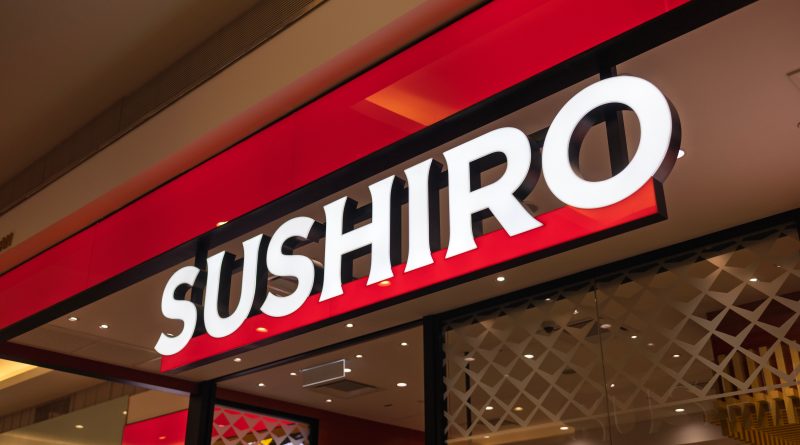
Sushiro’s New York debut is bigger than sushi
Subscribe to our free newsletter today to keep up to date with the latest food industry news.
Sushiro’s first permanent US restaurant will open this fall in Times Square, bringing one of Japan’s best-known conveyor belt sushi brands into one of the world’s most competitive dining markets. The company is taking over a 9,000-square-foot, three-floor former McDonald’s at 667 Eighth Avenue near West 42nd Street, with conveyor belt dining rooms planned for the first and second floors and a private dining room with a sushi bar in the cellar.
For New York, the opening is another major Japanese restaurant debut. For Sushiro, it is a strategic test. The Osaka-founded chain has grown to more than 800 locations worldwide, while parent company Food & Life Companies has positioned the brand at the center of its international expansion strategy.
Japan’s biggest sushi chain is entering one of the world’s toughest restaurant markets
New York remains one of the hardest places in the world to launch a restaurant at scale. Rents remain high, labor costs continue to rise and consumer expectations are shaped by everything from neighborhood omakase counters to mass-market lunch spots. Times Square introduces another challenge: relentless foot traffic, constant competition and a customer base that changes by the hour.
That makes Sushiro’s choice of location notable. The brand is not entering quietly through a suburban pilot site or a small-format rollout. It is taking over a prominent Manhattan property beside the Port Authority Bus Terminal, close to the theater district and one of the city’s busiest transit corridors.
Reports indicate the restaurant will include roughly 150 to 170 seats across three floors. The scale points to confidence in a business model built around volume, speed and operational consistency. Diners will order through digital kiosks at their booths, while food and drinks move from the kitchen to the table through conveyor systems designed to reduce wait times and improve table turnover.
The approach is not centered on novelty alone. It reflects a broader shift inside the restaurant industry, where operators are under pressure to serve more customers with tighter labor models and greater efficiency.
Conveyor belt sushi has become a technology-led dining format
Conveyor belt sushi once carried novelty appeal for many American diners. Plates moved through the dining room while customers selected items directly from the belt, often based on color-coded pricing systems. Sushiro’s version is more structured and more digitally integrated.
Orders are placed through touchscreens and delivered directly from the kitchen to individual tables rather than relying entirely on circulating plates. The result is a dining model that combines automation with made-to-order service.
That distinction matters because modern restaurant operations increasingly resemble logistics systems. Restaurants must predict demand, manage staffing, speed up table turns and maintain consistency while keeping labor costs under control. Sushiro’s operating model addresses those pressures directly inside the customer experience.
The New York menu is expected to extend beyond sushi and include ramen, somen, steamed egg custard and desserts including catalana and warabimochi. That broader selection gives the chain flexibility across multiple customer groups, from tourists seeking a recognizable Japanese dining experience to office workers looking for a fast meal.
Sushiro also enters a market where conveyor belt sushi already has growing visibility. Rival Japanese chain Kura Sushi has expanded across parts of the Northeast, including locations in Jersey City and Queens. The broader category is becoming less of a niche concept and more of a viable fast-casual format within major US cities.
Affordable dining could become Sushiro’s biggest advantage
The timing of Sushiro’s US expansion may prove as important as the format itself. Consumers continue to face elevated restaurant prices after several years of inflation across the dining sector. Many diners still prioritize eating out, though value and pricing transparency now carry greater weight in purchasing decisions.
Conveyor belt sushi aligns well with those preferences because customers can see portions, prices and pacing in real time. The experience offers a middle ground between fast food convenience and traditional sit-down sushi restaurants.
Sushiro’s US positioning emphasizes fresh ingredients, full meals and everyday pricing. That strategy could resonate in Times Square, where visitors often choose between expensive full-service restaurants and lower-quality quick-service options.
The larger challenge will be whether Sushiro can translate its Japanese operating model into the US market without losing the efficiency that made the concept successful overseas. Food sourcing, labor regulations, customer behavior and real estate economics all differ significantly between Japan and New York.
The Manhattan opening represents more than another international restaurant launch. It reflects growing confidence among Japanese restaurant operators that the US market is ready for scalable, technology-enabled dining formats that sit between premium hospitality and fast casual convenience.
If Sushiro succeeds in Times Square, the next question may not be whether Americans embrace conveyor belt sushi. It may be how quickly the model expands beyond New York.
Source