Turkey and diesel push Thanksgiving dinner cost up 6%
Subscribe to our free newsletter today to keep up to date with the latest food and beverage news.
The average Thanksgiving dinner cost for 10 people has risen for the first time since 2022, with higher turkey prices and record diesel costs pushing the bill to $58.63.
That number comes from the American Farm Bureau Federation’s 41st annual Thanksgiving dinner cost survey, released on Nov. 18. It is up 6% from last year and works out at about $5.86 per person.
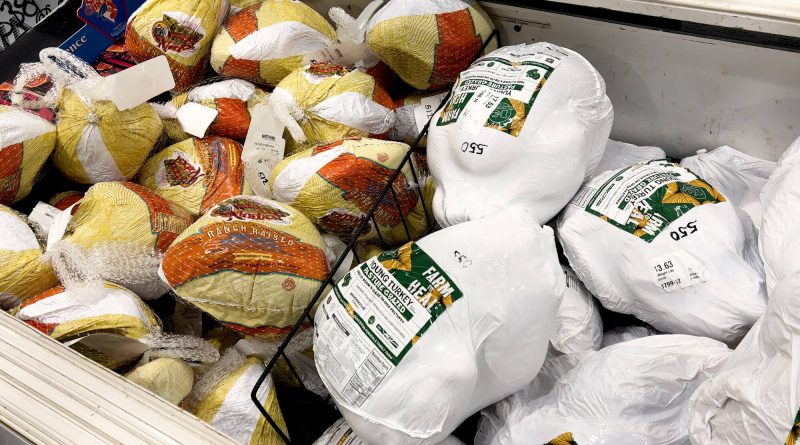
Turkey led the increase. A 16-pound frozen bird averaged $23.68, up 10% from $21.50 a year ago. Milk and cranberries also posted some of the largest percentage gains, with a 12-ounce bag of cranberries up nearly 9%.
The total is still more than 8% below the record $64.05 set in 2022. But the direction has changed, and the reasons behind it say a lot about how farm, fuel, and supply pressures are reaching the checkout.
Turkey prices are climbing even as flocks recover
Bird flu has heavily reduced US turkey flocks since 2022. Cases are now declining, and turkey production rose substantially this year, according to AP.
More birds have not meant cheaper birds. The Farm Bureau links the higher price to strong demand and tight inventories. AP points to growing interest in lean protein and rising US turkey exports, both of which have limited the supply available to American shoppers.
Wholesale prices show the pressure more clearly. USDA expects a whole frozen turkey hen to average a record $1.76 per pound at wholesale this year, up 29%.
Shoppers saw a 10% rise at retail. The gap between those 2 figures raises the question of who is absorbing the difference, and for how long.
For producers, the numbers mark a change in fortune after a difficult few years. “This is one of those years that turkey producers are feeling a little bit better about their lot in life,” said Mark Jordan, executive director of Leap Market Analytics.
Diesel costs are moving through the food chain
Fuel is the other major pressure on the bill. The Farm Bureau says higher fuel costs raised the price of processing and transporting items including milk, dinner rolls, potatoes, and cranberries.
AAA reported a record national average diesel price of $6.53 per gallon in September. On Nov. 18, the average stood at $5.96, up 58% from a year earlier.
Farmers are carrying those costs too. The Farm Bureau cites record diesel prices, elevated fertilizer prices, higher labor expenses, and rising rent and electricity bills. It describes farmers and ranchers as “price-takers, not price-makers,” meaning they have little ability to pass those costs on.
Turkey may not yet reflect the fuel spike. Jordan told AP that diesel likely had little effect on this year’s turkey prices, because most decisions were made before diesel prices climbed. He said it could have a notable effect next year.
Not every item rose. A vegetable tray of celery and carrots fell 3.7%, the largest percentage decline in the survey. Frozen pie crusts posted the largest dollar drop, down 9 cents, and heavy whipping cream was also cheaper.
The Northeast pays the most for Thanksgiving dinner
Regional gaps remain wide. The Northeast has the most expensive dinner at $61.57, about 5% above the national average. The West follows at $58.74, then the Midwest at $56.89. The South is the cheapest region at $54.33.
Where people shop matters as well. AP reports that Aldi priced a feast for 10 at $39 using a menu that mirrors the Farm Bureau’s, while Walmart’s version came in at $35 with a slightly different list of items.
The survey lands against a wider backdrop of high grocery bills. US government data shows food-at-home prices rose 22% from October 2021 to October 2026, almost twice the usual pace of food inflation. USDA expects food-at-home prices to rise 2.3% this year, below the recent annual average of 2.6%.
That leaves the industry watching next year closely. If Jordan is right, diesel costs that largely missed this year’s turkey prices could show up in the next cycle, just as producers rebuild supply. Whether a recovering flock can offset higher fuel, labor, and fertilizer costs will decide if this year’s increase is a one-off or the start of a new climb.
Source:
American Farm Bureau Federation
Associated Press via KPTV