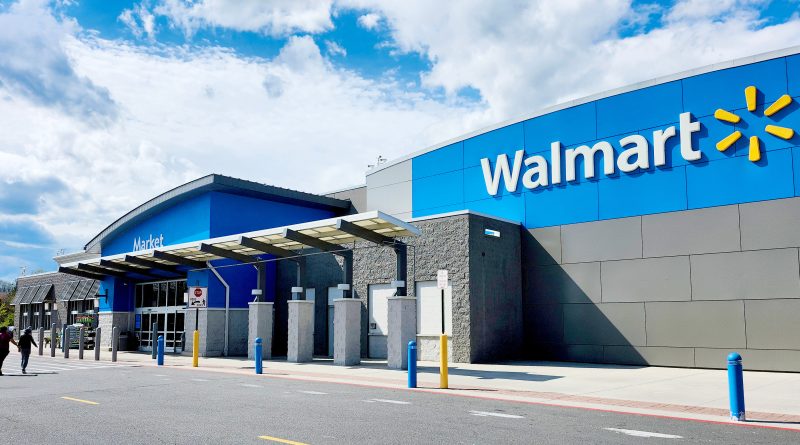
Walmart’s pricing advantage is under pressure
Subscribe to our free newsletter today to keep up to date with the latest food industry news.
For decades, Walmart has defined price leadership in US grocery retail. Its scale, supplier leverage and logistics network created a consistent perception among consumers that it offered the lowest prices across most categories. That assumption is now being tested.
Recent price comparisons across major retailers including Walmart, Kroger and Meijer suggest that Walmart no longer holds a clear lead on total basket cost. While it remains competitive on many staples, the gap has narrowed to the point where regional and national competitors can undercut it depending on product mix and location.
The shift reflects a broader recalibration in grocery pricing. Retailers are responding to sustained cost pressures, from transportation to labor, while consumers have become more selective in how and where they shop. Price sensitivity has increased, but so has awareness. Shoppers are comparing baskets, not individual items, and that shift favors retailers that can optimize pricing across categories rather than relying on a reputation built over time.
Walmart’s investments in supply chain infrastructure, reported to total billions in recent years, have improved efficiency but also added complexity to its cost structure. At the same time, competitors have become more disciplined, focusing on lean assortments and tighter pricing strategies that challenge Walmart’s historical advantage.
Competitors are redefining the low-cost model
The most significant pressure on Walmart is not coming from traditional full-service grocers, but from discount chains and membership-based retailers that operate on different models.
Aldi and Lidl have built pricing strategies around limited assortments and private-label dominance. By reducing SKU counts and controlling production, these retailers maintain lower price points across a wide range of everyday goods. In some comparisons, total basket prices come in several percentage points below Walmart.
Costco presents another challenge. Its membership model allows for aggressive pricing, particularly on bulk items. While not directly comparable for all shoppers, it delivers lower per-unit costs, reshaping expectations around value.
Regional players like Meijer also show how targeted competition can erode Walmart’s position. By combining localized pricing strategies with strong private-label offerings, they compete on both price and convenience within specific markets.
The common thread is a shift away from broad pricing. Retailers are optimizing around specific strengths, whether that is private-label penetration, supply chain simplicity or customer segmentation.
What rising grocery costs mean for retailers and consumers
Grocery inflation continues to influence both retailer strategy and consumer behavior. Although price increases have moderated compared to earlier peaks, the cumulative effect since 2020 remains significant. This has created a more cautious and analytical shopper.
Consumers are splitting their grocery spend across multiple retailers. A single weekly trip is often replaced by a combination of discount stores, warehouse clubs and traditional supermarkets. The goal is cost efficiency across an entire basket.
Retailers are adapting through more dynamic pricing, targeted promotions and expanded private-label ranges. Loyalty programs and digital tools play a larger role, allowing grocers to tailor offers and retain customers who might otherwise shift to competitors.
This environment reduces the likelihood that any single retailer can dominate on price alone. The competitive landscape is shaped by small advantages across categories, regions and customer segments.
The future of grocery pricing is fragmented, not dominated
The idea of a single lowest-price leader across all grocery categories is becoming less realistic. Pricing is increasingly fragmented, influenced by supply chain variables, regional competition and strategic positioning.
Walmart remains a major force and will continue to compete aggressively. Its scale still provides advantages that are difficult to replicate. The margin for error is smaller, and competitors are more capable than in previous cycles.
Looking ahead, pricing leadership will depend on flexibility rather than scale alone. Retailers that can adjust quickly, use data effectively and align pricing with consumer behavior will be better positioned to capture share.
For consumers, the search for value becomes more active. The cheapest option is no longer a fixed destination, but a moving target shaped by where and how people choose to shop.
Sources