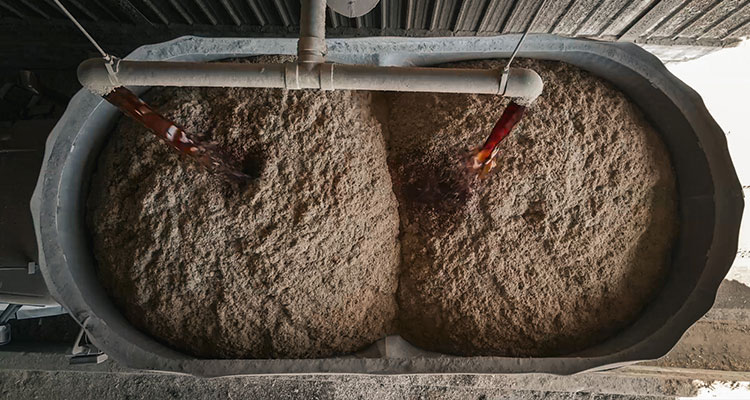
Westway Feed Products meets shifts in livestock nutrition, sustainability, and production systems through focused leadership
For much of the past century, livestock nutrition followed a basic formula. Farmers, ranchers, and dairymen relied on pasture, hay, and locally available feed, guided more by observation than measurement. Diets were broad, animals grew more slowly, and inputs were shaped by what was on hand rather than what was precisely required.
Today, that approach no longer applies. Nutrition is calibrated to the animal, matched to life stage and genetics, and supported by analysis, modeled outcomes, and a deeper understanding of how feed behaves in the rumen. Producers now work with diets that include co-products, targeted supplements, and ingredients designed to improve digestion, consistency, and output while managing cost and environmental impact.
The evolution from general feeding to precision nutrition has unfolded over decades. Companies that started in one era now operate in a completely different one. Westway Feed Products (Westway) traces its roots back more than 80 years, when it found practical uses for excess molasses. Over time, through acquisitions, partnerships, and growing technical expertise, the business has moved with the sector. Westway is now a leader in liquid nutrition and system performance across North America.
Leading the next phase is Blaine Blackburn, who took on the role of President in January 2025 after building his career across livestock nutrition, commercial leadership, and agribusiness. He now guides Westway as it responds to a more complex set of demands, in which feed is no longer just an input but a tool for shaping outcomes across the entire production system.
“Westway Feed is the largest liquid feed company in North America. We make products for three major food-producing sectors. Our feeds improve palatability and pellet quality, support healthier animals, boost milk production, and help beef cattle grow more efficiently. In sum total, we help livestock producers to be more efficient through their nutrition systems.”
Science in practice
Blaine has spent nearly three decades in feed and nutrition, including leadership roles at Cargill in sales and marketing. “Thirty years ago, we thought, ‘That’s a carbohydrate,’ without understanding the distinctions. We used to lump sugars and starches together. But lactose, glucose, sucrose; each sugar fraction acts differently in the rumen,” he says.
A deeper understanding of these changing dynamics has reshaped Westway’s approach to product development, focusing on how nutrients perform over time and how animals respond, with the aim of reducing energy swings and improving consistency. “If we provide a steady nutrition profile, cows perform more consistently. Consistency is key for production, whether it’s milk or beef.” The focus on consistency now goes beyond the animal. Westway’s leadership team draws a connection between livestock biology and soil biology, a link gaining attention as producers rethink input use and land management.
“The microbes in the soil microbiome are much like those in the rumen. If we nourish them the same way, they generate more nutrients for the soil.” The connection places Westway at the heart of a movement that links feed, soil, and output in a broader system.
Portfolio shifts
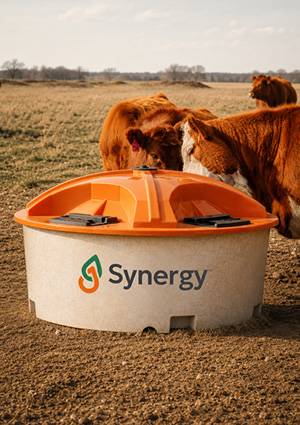
Product development now reflects a different way of thinking. Instead of treating feed as a set of separate inputs, Westway is designing solutions around how nutrients are delivered, consumed, and perform over time. “Synergy is our newest product, designed for the pasture beef segment. It brings mineral and liquid feed together, giving pasture cattle a one-stop shop. Cattle keep grazing, but now they get their mineral and liquid feed from a single lick tank,” Blaine points out.
“The product boosts forage digestion and delivers a more effective, cost-efficient nutritional load than dry feed alternatives. Ultimately, this contributes to time and money savings for our customers.”
At the same time, Westway continues to examine how it grows, building on a history shaped by acquisitions. “In 1997, we acquired Cargill’s molasses division and jumped from a handful of plants to more than 25 overnight. In 2002, we bought Pacific Molasses from Tate & Lyle, nearly doubling our facilities again.”
These acquisitions expanded the business across North America. The next phase takes a broader approach to growth. “As we look ahead, we’re considering new acquisitions and partnerships. We’re asking ourselves how we can grow beyond just building another asset.”
That strategy demonstrates how Westway invests across its operations. It has improved facilities, extended asset life, expanded testing and product capabilities.
Sustainability remains central, grounded in how Westway uses raw materials. “That’s really what Westway is all about. At our core, we upcycle products. We ask, how can we turn these products into meat and milk?”
Recent projects include site upgrades and energy management changes. “We’ve completed more than 50 projects, from upgrading boilers and compressors to insulating steam lines. We’re preparing to install solar panels at four of our facilities, placing them right on top of the tanks.”
Culture and safety
Changes in operations and product development reflect the Westway leadership team’s style. In recent years, Westway has worked to define its organizational approach. “Culture is at the heart of what we do. We put people first: our team, our customers, and our communities.” he explains.
“If you’re just here to get a job for a paycheck, this probably isn’t the place for you, because our vision is to be the premier provider of liquid solutions to help our customers feed the world.”
Workforce development sits at the core of the company culture. Westway gives team members opportunities to see different parts of the business. “We focus on experiential learning. We send employees to meet customers, listen to their experiences, and understand the impact of our liquid feed. It helps broaden perspectives and encourage new ways of thinking.”
The structure of the organization changed, moving away from centralized decision-making. “It’s really about how you serve that region, not necessarily trying to get one person in a center point making decisions, but how you push decisions out.”
Safety remains the foundation across all sites and activities, Blaine says: “Our number one priority is safety. As a team, we all have a personal responsibility to our 210 employee families. Each employee must go home safely every day. If we want to be a high-performing team, we each have to put safety at the forefront of what we do every day.”
Next phase
Westway’s next phase builds on its position in liquid feed while extending into areas that more directly connect nutrition and land use. “Westway will continue to grow through customer acquisition, potential expansion, and entering into this agronomy space around that merging of nutrition and soil science.”
The definition of growth, however, is shifting alongside the market it serves. Blaine concludes: “Growth at Westway doesn’t look like tripling our volume. It looks like tripling our value to our customers. They will be the ones who help us define what that success looks like.”
In a sector that has moved from input supply to system performance, Westway is choosing its role deliberately – less about scale, more about impact across the production chain.