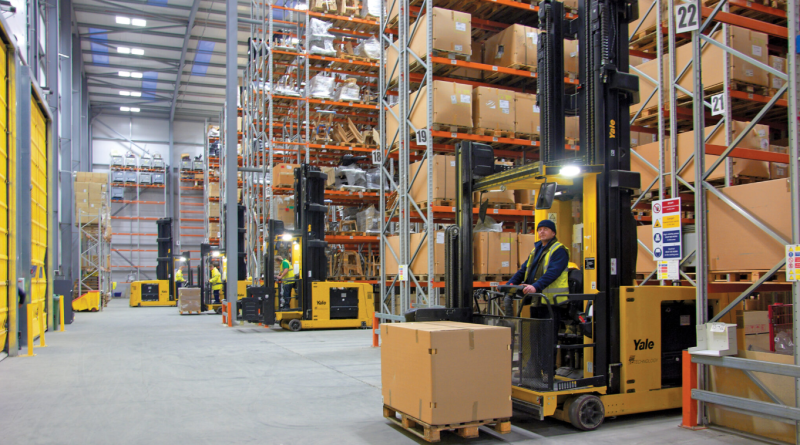
What Are the Best Hyster and Yale Forklifts for Food and Beverage Warehousing?
Warehouse forklift selection is ultimately a question of operational alignment. The right truck must match aisle geometry, throughput expectations and long-term cost structure without introducing unnecessary complexity into the fleet. Many operations run into avoidable problems by choosing equipment that doesn’t fully align with their layout or duty cycle. This results in reduced productivity, higher maintenance frequency and a total cost of ownership that exceeds expectations. For food and beverage warehouses specifically, equipment selection is more complex due to strict hygiene standards, temperature-controlled environments, and regulatory requirements that directly affect product safety and quality.
The Importance of Forklift Selection for F&B Sector
According to Burns Industrial Equipment, “The Occupational Safety and Health Administration (OSHA) categorizes forklifts into seven classifications. These groups are designated according to their design and uses.” Choosing the right forklift is critical because it directly impacts efficiency, safety and long-term operating costs.
The wrong equipment can lead to bottlenecks, increased product damage and higher maintenance demands, especially if it doesn’t align with aisle widths, load requirements or duty cycle.
In food and beverage operations, equipment mismatches create additional risks, including contamination, temperature fluctuations that compromise product integrity and regulatory noncompliance. According to the FDA’s Food Safety Modernization Act (FSMA) guidelines updated in 2025, warehouses storing food products must maintain equipment that prevents contamination through proper sanitation and design features. A properly matched forklift supports smoother workflows, reduces downtime and helps standardize the fleet, making operations easier to manage and scale over time.
1. Best for Narrow Aisles and High Racking: Yale MR14-25A Reach Truck
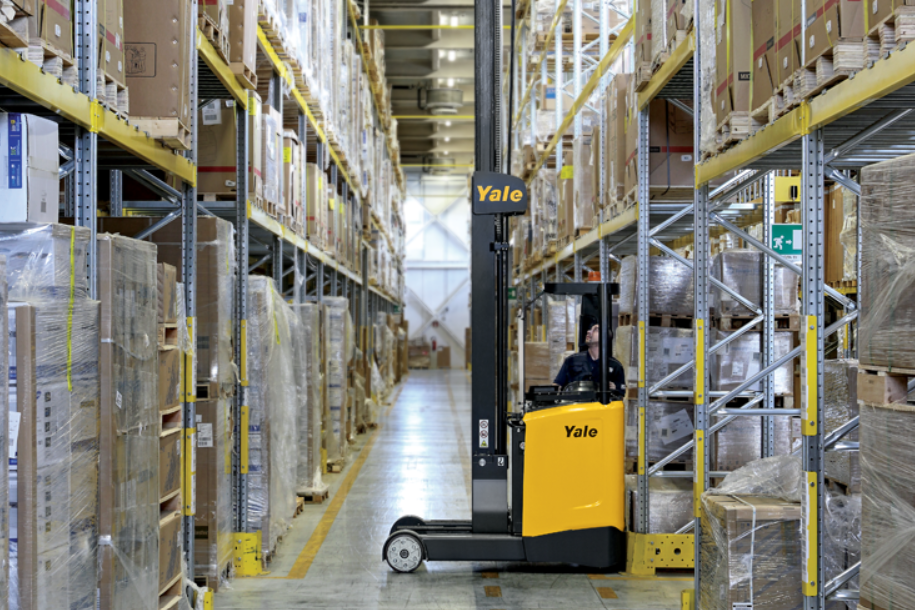
Image: Yale MR14-25A
The Yale MR14-25A from Burns Industrial Equipment is purpose-built for high-density warehouse storage where aisle width is limited and vertical space must be fully utilized. In these environments, the margin for error is small. A standard counterbalance truck often cannot operate efficiently without forcing wider aisles, which directly reduces storage capacity. The MR14-25A eliminates that compromise by allowing operators to work confidently within narrow-aisle configurations while still achieving significant lift heights.
From an operational standpoint, this model provides a high level of control at elevation, which is essential for reducing product damage and maintaining consistent cycle times. The mast’s stability and the controls’ responsiveness support precise placement, even at maximum height. This directly impacts productivity, particularly in facilities where pallet positions are densely packed and picking accuracy is critical.
For beverage warehouses managing over 3,000 SKUs — a common challenge according to Yale’s beverage industry analysis — the MR14-25A’s precision placement capabilities help accommodate the SKU proliferation that defines modern beverage distribution.
Total cost of ownership is where the MR14-25A becomes especially compelling. As an electric unit, it avoids the ongoing fuel costs associated with internal combustion equipment and significantly reduces wear-related maintenance. The zero-emission electric powertrain is particularly critical for food and beverage warehouses, where indoor air quality standards and HACCP (Hazard Analysis and Critical Control Points) compliance prohibit exhaust fumes that could contaminate products. The design allows technicians to access key components, minimizing downtime during maintenance.
2. Best for Dock Work: Yale ESC030-040AD
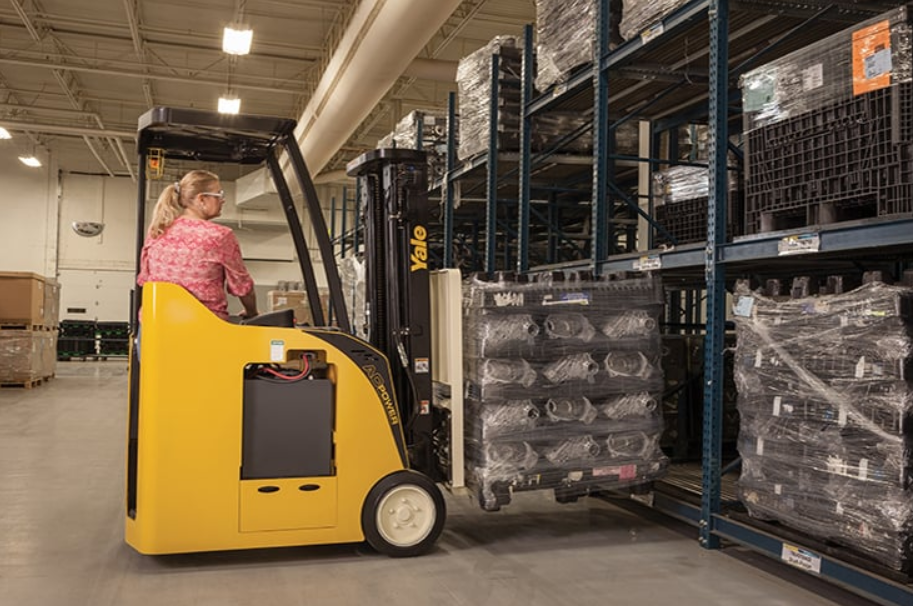
Image: Yale ESC030-040AD
The Yale ESC030-040AD is designed for the fast-paced, repetitive demands of dock operations and staging areas. These environments require constant movement, tight turning capability and the ability to handle frequent starts and stops without compromising operator efficiency. Choosing the wrong type of truck for this role often leads to congestion, slower loading times and increased wear on the equipment and operator.
This stand-up electric counterbalance model addresses those challenges by prioritizing maneuverability and visibility. Its compact footprint allows it to operate effectively in confined dock spaces and staging lanes, where space is often shared with pedestrians, pallet stacks and trailer access points. The stand-up configuration supports quicker directional changes, which is essential in high-cycle applications where operators are repeatedly entering and exiting trailers or repositioning loads over short distances.
The electric powertrain is critical for performance and cost control. Indoor dock environments benefit from zero emissions and lower noise levels, improving working conditions and ensuring compliance with operational standards. For food and beverage facilities, the ESC030-040AD can be configured with food-grade hydraulic oil and lubricants that comply with H1 requirements — critical for warehouses that must meet FDA inspection standards. The reduced number of moving parts compared to internal combustion alternatives translates into lower maintenance requirements and fewer unexpected breakdowns.
3. Best for Indoor Warehousing: Hyster R1.4-2
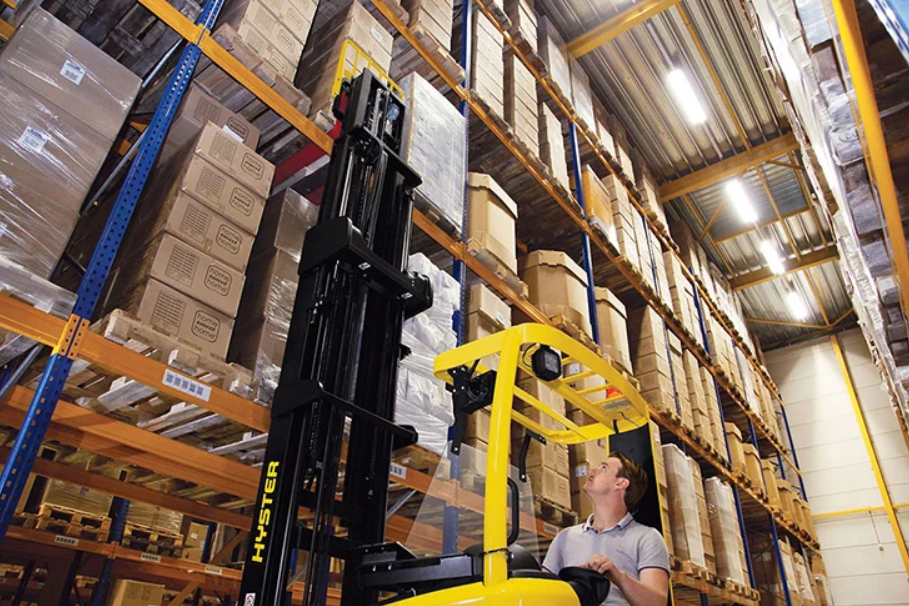
Image: R1.4-2.5A Hyster Forklift
The Hyster R1.4-2.5A is one of the most balanced indoor warehouse trucks available through Burns Industrial Equipment, built specifically for medium- to high-intensity operations where reliability and cost control matter just as much as lift performance. With capacities ranging from roughly 3,000 to 5,500 pounds and configurations tailored for different chassis lengths and mast heights, it adapts cleanly to a wide range of warehouse layouts without forcing changes to aisle structure or racking design. This versatility makes it particularly suitable for food distribution centers that handle a diverse range of products, from ambient dry goods to temperature-sensitive items requiring cold storage.
This model is engineered to reduce planned and unplanned downtime. Extended service intervals, easy access to key components and integrated diagnostics all contribute to faster maintenance cycles and fewer disruptions on the floor. The electric system further supports lower operating costs through energy-efficient performance modes and reduced mechanical wear, while features like regenerative braking and simplified hydraulic systems eliminate common maintenance points.
For operations in cold storage, Hyster equipment can be configured with cold storage packages designed for continuous use in refrigerated coolers and intermittent use in freezers down to -15°F, addressing the temperature extremes that affect battery performance and component reliability
Frequently Asked Questions
Below are some of the common questions professionals in the industry have when looking for forklifts.
Is it best to buy, lease, or rent a Hyster or Yale forklift for a warehouse?
Buying is best for long-term, high-use operations seeking lower lifetime costs. Leasing works well for preserving capital and upgrading regularly. Renting is best for short-term needs, seasonal spikes or trialing equipment before committing.
Which Hyster and Yale forklift models are best for narrow-aisle applications?
The Yale MR14-25A and Hyster R1.4-2.5A are both strong narrow-aisle solutions. The Yale focuses on high-density storage precision, while the Hyster provides balanced indoor performance with flexibility across different warehouse layouts.
What maintenance plan options are available for Hyster and Yale forklifts?
Common options include planned maintenance programs, full-service contracts and fleet management plans. These typically cover routine servicing, parts replacement and inspections, helping reduce downtime, control costs and extend equipment lifespan. For food and beverage warehouses, maintenance programs should prioritize hygiene protocols, including the use of food-grade lubricants and regular sanitation to maintain compliance with FDA and FSMA requirements.
Streamline Warehouse Operations
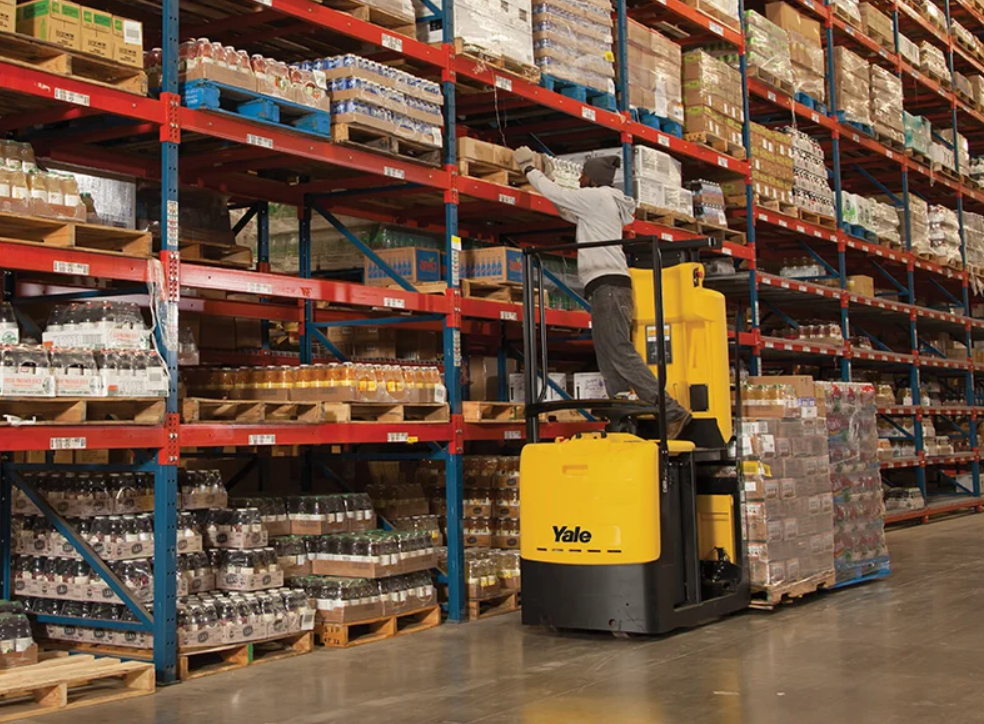
The most effective warehouse operations are built on a deliberate combination of equipment that aligns with layout, workload and long-term cost control. By choosing the right solutions, operations can reduce uncertainty, avoid costly misfits and create a fleet that’s easier to maintain and scale. This results in better productivity and a more predictable operation where downtime is minimized, service is streamlined and total cost of ownership remains firmly under control. For food and beverage warehouses facing the unique challenges of temperature control, hygiene compliance and contamination prevention, selecting equipment engineered specifically for these demanding environments ensures both operational efficiency and regulatory compliance that protects product safety from dock to distribution.
About the Author
Eloise Badenhorst is a digital analyst at an award-winning agency with 18 years of writing experience, including over five years specializing in food manufacturing, supply chain management, sustainability and packaging innovation, bringing comprehensive insights to the sector.
*Please note that this list includes sponsored content. Some of the companies, products, or services featured have entered into commercial agreements for placement. Sponsored placements do not necessarily reflect an endorsement and should be considered alongside other options in the marketplace.