What Yelp’s fastest-growing brands reveal about dining in 2026
Subscribe to our free newsletter today to keep up to date with the latest food industry news.
Restaurant rankings often provide a snapshot of which brands are performing well at a given moment. More revealing is what those rankings say about changing consumer behavior. Yelp’s Fastest Growing Brands 2026 list offers that perspective.
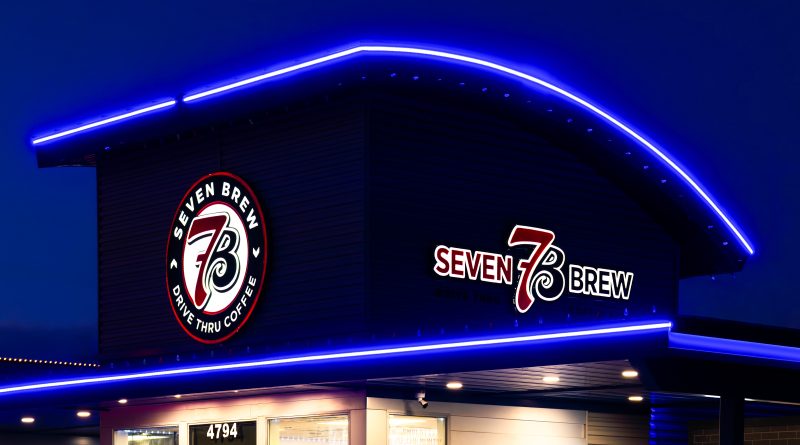
This year’s rankings place drive-thru coffee chain 7 Brew at the top, while Smoothie King and several other rapidly expanding concepts also rank highly. Although the brands differ in format and positioning, their success points to a common set of forces reshaping the restaurant industry.
Consumers are placing greater value on convenience, seeking healthier menu options and showing a growing willingness to embrace emerging brands over established market leaders. Together, these shifts are creating opportunities for restaurant operators that align their business models with evolving expectations.
For operators, investors and suppliers, the rankings offer insight into what growth may look like across foodservice during the coming years.
Convenience has become a competitive advantage rather than a feature
The clearest message from Yelp’s rankings is that convenience is no longer an operational consideration alone. It has become a defining factor in customer choice.
The rise of 7 Brew illustrates the trend. The Arkansas-based coffee chain has built its expansion strategy around a drive-thru-first model designed to maximize speed and customer throughput. Unlike traditional coffeehouses that encourage customers to linger, 7 Brew focuses on getting customers in and out efficiently while maintaining a personalized experience.
The model reflects broader consumer realities. Hybrid work arrangements, busy schedules and increasing demands on personal time have elevated convenience from a desirable attribute to a primary purchasing criterion. Consumers increasingly expect food and beverage brands to fit seamlessly into their daily routines.
The shift is particularly visible in coffee, where drive-thru formats continue to gain traction. While Starbucks remains the category leader, newer competitors are finding success through operational simplicity and frictionless service.
The implications extend beyond coffee. Across quick-service and fast-casual segments, operators are investing in mobile ordering, loyalty programs, digital payment systems and drive-thru optimization. Restaurants that remove friction from the customer journey are increasingly outperforming those that rely solely on product differentiation.
As labor pressures and operating costs remain elevated, convenience has become one of the few competitive advantages capable of improving both customer satisfaction and operational efficiency.
Wellness is evolving from a niche proposition into a growth engine
Another theme emerging from Yelp’s rankings is the continued rise of health-oriented dining concepts.
Smoothie King’s strong position on the list reflects years of investment in positioning itself as more than a smoothie brand. The company has aligned its offerings around fitness, nutrition and wellness goals, creating a proposition that resonates with consumers seeking healthier choices without sacrificing convenience.
The brand’s growth trajectory highlights the increasing mainstream acceptance of wellness-focused foodservice. Once considered a niche category, health-oriented concepts are demonstrating an ability to scale nationally through franchising and multi-unit expansion.
Consumer attitudes have evolved considerably during the past decade. Rather than viewing healthy eating as a specialized lifestyle choice, many customers now see nutritional value as a routine part of everyday purchasing decisions.
The shift is creating opportunities across multiple categories. Beverage concepts, fast-casual restaurants and snack-focused brands are introducing products that emphasize protein, functional ingredients and perceived health benefits.
Convenience and wellness are no longer competing priorities. The brands gaining momentum are often those that successfully combine both. Consumers increasingly want options that support health goals while fitting within demanding schedules.
For operators, this means health-conscious menu development is becoming less about responding to a trend and more about meeting an established expectation.
Challenger brands are proving scale no longer belongs only to incumbents
One of the most significant findings from Yelp’s rankings is the continued success of challenger brands.
Historically, large restaurant chains benefited from advantages in real estate, marketing budgets and supply chain scale. Those advantages remain important, but they no longer guarantee consumer attention.
Consumers now have unprecedented access to information through review platforms, social media and digital discovery tools. As a result, emerging brands can build awareness and credibility much faster than in previous decades.
Yelp’s rankings consistently feature concepts that were largely regional players only a few years ago. Their growth demonstrates how consumer discovery has become increasingly decentralized.
Many of these brands succeed because they offer a distinctive experience rather than competing primarily on price. They develop strong brand identities, create memorable customer interactions and cultivate loyal followings before expanding into new markets.
The pattern reflects wider shifts across consumer industries. Customers are increasingly willing to experiment with alternatives to established leaders when they perceive greater authenticity, convenience or value.
For larger restaurant companies, the lesson is straightforward. Scale alone is no longer sufficient protection against emerging competitors. Brands must continually innovate to maintain relevance with consumers whose expectations continue to evolve.
The success of companies such as 7 Brew and Smoothie King demonstrates that growth increasingly belongs to organizations capable of identifying behavioral shifts early and building business models around them.
Yelp’s Fastest Growing Brands 2026 ranking reveals more than which restaurant concepts are expanding. It highlights a transformation in consumer priorities. Convenience has become essential, wellness has moved into the mainstream and challenger brands are finding new pathways to national scale.
The brands capturing market share are not necessarily reinventing foodservice. They are responding more effectively to changing consumer expectations. As those preferences continue to evolve, the industry’s next generation of leaders is likely to emerge from companies that adapt fastest rather than those with the largest footprints.
Source