When the Power Goes Out, Quick Cold-Chain Rentals Save Thousands in Food Waste
A utility crew pulls the meter for a service upgrade, and the walk-in cooler on your restaurant remodel goes quiet. Four hours later, the owner’s meat, dairy and produce could be headed for the dumpster.
Quick cold-chain rentals give your schedule a backup plan that keeps perishables cold until the power situation settles.
Why Power Access Became a Scheduling Variable
Jobsite power is rarely as steady as the schedule assumes. Customers in the United States averaged 11 hours of electricity interruptions in 2024, nearly double the decade-before average. Hurricanes Beryl, Helene and Milton drove most of that time. South Carolina customers went without power for close to 53 hours.
Scheduled outages must also be accounted for. A service upgrade requires the utility company to disconnect the meter. A panel swap or switchgear replacement may require a planned shutdown lasting from a few hours to a full shift. On a ground-up build, the walk-in sometimes arrives before permanent power does.
Each of these is routine work for an electrical subpanel. For a restaurant, grocery store or commissary kitchen owner, that same window puts refrigerated inventory at risk.
On many tenant improvement jobs, the general contractor or the client may carry the risk, usually after something goes wrong. Settling potential problems at the preconstruction meeting costs far less.
The Four-Hour Clock on Refrigerated Food
Food safety rules set a firm deadline. Under Oregon’s retail food guidance, temperature-controlled for safety (TCS) foods held above 41° Fahrenheit for over four hours must be removed from service. TCS foods include most items in a commercial walk-in, such as raw meat, poultry, many dairy products, cut melons, cut tomatoes, cut leafy greens and many cooked foods.
Documentation is another key factor. Wisconsin’s retail food guidance says TCS foods that went unmonitored should be discarded if there’s any chance they warmed past that limit. Without a log, even a short outage can cost the whole walk-in, even if your crew kept the cooler closed the entire time.
Someone must note the exact time the power drops and track food temperatures with a calibrated probe thermometer and a log sheet. If the kitchen manager and your supervisor both assume the other has it covered, the safest outcome is disposal.
How Quick Cold-Chain Rentals Close the Gap
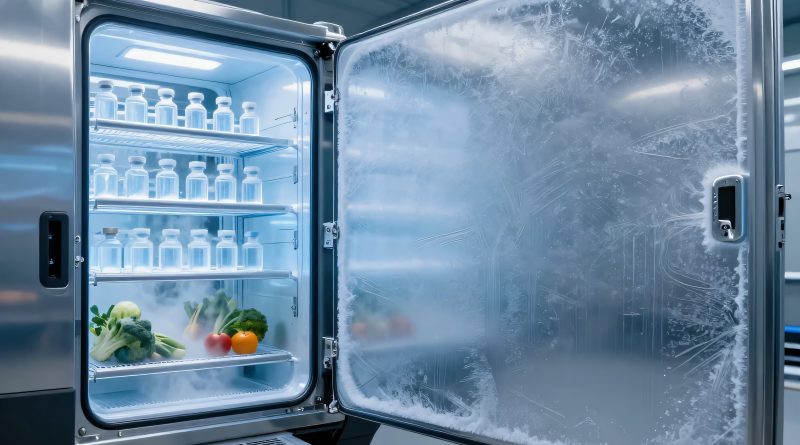
Portable walk-in coolers and freezers arrive by trailer or skid. They run on shore power or a generator while the building’s refrigeration sits idle. Temporary units can reduce food loss during refrigeration repairs and similar downtime, since the backup carries the load until the permanent system comes back online. For a contractor, that turns a hard deadline into a planned step in the sequence.
Picture a restaurant tenant improvement with a Tuesday morning electrical cutover. The rental unit arrives on Monday afternoon on a level pad near the back door. Kitchen staff loads it once it holds at 38° Fahrenheit and logs the temperature every two hours. The cutover runs long and wraps at 3 p.m. instead of noon. The walk-in pulls back down to temperature, and the product moves back inside on Wednesday morning.
The cold-storage backup plan can fail if the rental unit cannot be easily connected to power.
A large gap between the unit and the nearest live circuit can delay startup by hours, so confirm power at the pad before delivery day.
Remote work raises the stakes even more. On a rural utility or pipeline job, crews often eat in a camp kitchen powered by generators. One failed generator overnight can wipe out a week of groceries that took a two-hour drive to buy. A rental cooler on its own power source gives that kitchen the second line of defense.
Building the Rental Into Your Project Schedule
Rentals work best when they’re scheduled from day one. South Carolina’s agriculture department’s 2024 guide for retail food operators notes that refrigerated trailers delivered during an emergency come with constraints, including delivery time, damaged roads, fuel supply and secure storage. Plan for the following factors before a scheduled shutdown:
- Lead time: Book the unit at least a week before the planned cutover and confirm delivery the day before.
- Pad and access: Pick a level that has a drained spot on the delivery truck that can be reached without blocking material drops or crane swings.
- Power source: Generators belong outside, and the CDC advises keeping them at least 20 feet away from doors, windows and vents.
- Security and records: Lock the unit, add it to your daily site walk and hand the kitchen a temperature log on delivery.
Doing the Math on Avoided Waste
Price the rental against what it protects. Portable walk-ins are usually rented daily, weekly or monthly. Compare that rate to the cooler inventory’s wholesale value, then add restocking labor and revenue lost for each missed service.
A one-day cutover on a busy restaurant job often puts a full walk-in, a dinner service and an emergency reorder on the line. Against that total, the cost of a short-term rental is usually easy to financially justify. During preconstruction, ask the owner for the value of the food, labor and lost service, and the decision usually makes itself.
There is currently a national goal to halve food loss and waste in the U.S. by 2030. Grocery chains and restaurant groups increasingly track waste for sustainability reports, so documented avoided losses carry weight.
Consider adding a cold-storage allowance to any bid that touches commercial refrigeration. Clients will likely notice when a contractor treats their inventory as carefully as the electrical drawings.
Keep Your Cool
Power interruptions are running longer, and planned shutdowns are part of nearly every commercial renovation. Food rules leave little room for guesswork once a cooler warms past 41° Fahrenheit. A quick cold-chain rental can minimize that risk.
Put outages in the schedule, log the temperatures and give the unit a table location and power source. Your client keeps the inventory, and you keep the job moving and the relationship intact.
*Please note that this list includes sponsored content. Some of the companies, products, or services featured have entered into commercial agreements for placement. Sponsored placements do not necessarily reflect an endorsement and should be considered alongside other options in the marketplace.